
It’s as common in Philippine homes and diners as eggs for breakfast or a sandwich for lunch in North America or Europe. It comes in a vast array of types suitable for different mealtimes, but real Pancit always includes a protein, rice noodles and vegetables…
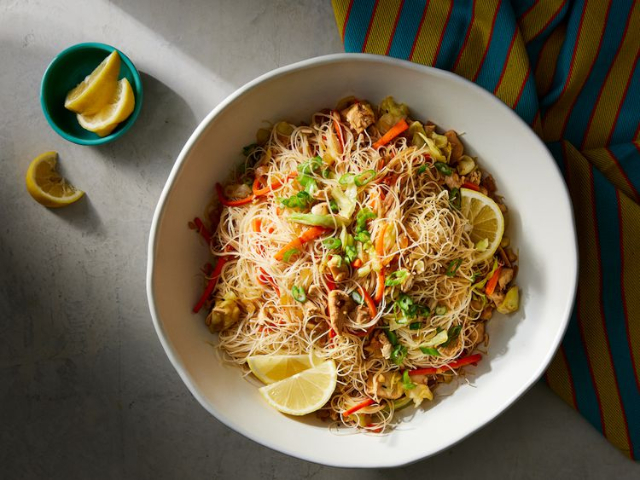
Call it Filipino Ramen. Or maybe, Fili-Pho. But it’s a unique but simple mash-up, from the nation of 7,600 islands, that will tickle everybody’s taste buds…
What it is…
As with may classics, this dish is really more of a concept than a specific recipe. Everybody loves it, and inevitably puts their own stamp on it. Also characteristic of many timeless classic foods, Pancit is a perfect way to use up leftovers and, in the Western setting, a great way to change-up a weeknight supper!
The recipe we cite today includes cabbage, onions and carrots as veggies. But you can use whatever you have on hand. Literally. Or whatever strikes your fancy, as long as the components complement each other. And you don’t have to limit your choices to traditional Philippine faves, or even Asian staples, for that matter.
Protein is usually part of a classic Pancit. Chicken and Pork are traditional. But, again, you can use whatever you want. A vegetarian version is completely okay. And you can even give a nod to Indo-nesia with a fried egg on top for protein, if you want.
What you do
Sizzle up your veggies over medium heat until they’re all cooked through, to fork-tenderness. You’ll have to add them at various times. relative to each other, to make sure they all come out ‘done’; at the same moment. Add the garlic first, so it can toast for a minute or so before meeting the other veggies. Add the soy sauce last, at the same time as the protein.
Add the protein last, about 2-3 minutes before the veggies are done, to let it get warmed through to a suitable temperature (165 F).
Then add the noodles and stir/toss everything together gently, preferably using using a pair of wood-en chopsticks so as not to break the noodles.
The noodles
In tune with the ad hoc nature of Pancit, you can use whatever long noodles you have on hand, from angel’s hair to udon. But vermicelli rice noodles are traditional, and, in my western opinion, go best with the other components.
You don’t have to pre-cook the noodles. In fact, the rule with rice noodles, generally, is to let them soften in cold water, for 5-10 minutes before draining them thoroughly and adding them to any dish. They’ll heat, and cook a little more, in the veggie, protein and soy sauce melange, and absorb lots of flavour in just a couple of minutes’ of simmering.
Tips and hacks…
DO follow the cold-water-soak method for the rice noodles. Not just in this case, but always!
Serve in bowls, not on plates, for authenticity and ease of consumption.
Try adding a dash or 2 of Sesame Oil for added depth of flavour, an extra umami kick, and a bright top note. The sesame literally dances with the lemon juice from the garnish slices!
All the salt you need is in the soy sauce. No pepper needed in this dish, at all.
My take
I’ve been making Pancit for decades without realizing it. Given the broad range of ingredients you can employ, my old, standby veggie stirfry with noodles – which I created out of necessity for a cheap, fast, filling meal back in college – really does qualify under the traditional definition. I can tell you, from long experience, that Pancit comes together in under 10 minutes, requires only one pan, and is virtually foolproof! And it’s inherently healthy, too!
~ Maggie J.