
2.4 min. read
If potatoes we not such a great food already, I might be more enthusiastic about today’s ‘new prod-uct’ exposé. Nevertheless, I deemed it appropriate to accord the new Poulette potato a post all its own just on the novelty angle alone…
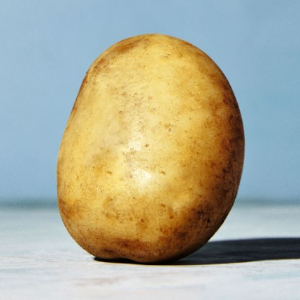
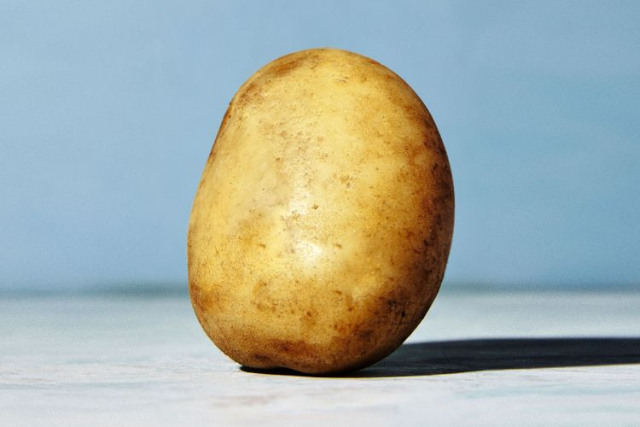 The Poulette potato: Does everything a good all-purpose potato should…
Who said the ancient and venerable potato wasn’t good enough? Who said we needed something ‘better’? Row 7 Seed Company did. And they painstakingly cross-bred a French hierloom spud and a Cornell University strain to produce the Poulette.
For the love of old potatoes…
“I love old potatoes. I don’t love most modern varieties of potatoes (think: Idaho, Russet), which have been selected for yield and uniformity and shelf life but not flavor,” Dan Barber, the famed chef be-hind Blue Hill at Stone Barns, and co-founder of Row 7, shared with Food & Wine. “But the heirlooms we love were once new too. Someone selected them. Row 7 is about continuing that tradition with both breeders and chefs at the table.”
‘Tastes like chicken!’
That’s the signature quality that makes the Poulette unique among tubers. You can have potatoes that taste like they’ve been roasting beside the bird for hours without all that fuss.
Also worthy of mention: the Poulette is an all-purpose, or Chef’s potato, which makes it useful in a wide range of dishes and applications.
Possible health benefits?
Okay… There is one worthy angle to the Poulette that I must mention. It’s got flavour of its own that the standard, ‘blank flavour canvas’ spud does not. And that could mean that some folks will forgo the usual butter, sour cream or other unhealthy toppings that routinely turn the humble spud from ‘hearty’ to ‘heart attack bait’.
On a more pedestrian level, it’s unique flavour may just get more folks eating potatoes, which would be a good thing in itself.
Row, in a nutshell…
Barber’s plant breeding company is as much a labour of love as an attempt to make some serious dough.
“We are a food company grounded in the notion that deliciousness might just change the world—and that it starts with the seed. Built by chefs, farmers, plant breeders, and plant eaters, we strive to make ingredients taste better before they ever hit a plate,” the Row 7 website’s About Us page begins. “The end goal? Tastier food, healthier soil, more diverse and nutritious diets for as many people as possible. In other words, a revolution we can all get behind.”
Row 7 sets a lofty bar on multiple challenges. But Barber sounds as though he’s gun-ho to pursue his goal to the end, come what may.
“[It’s] a whole pantry full of deliciousness,” Barber said of what’s to come. “Today we’re working with more than 50 plant breeders and chefs around the country, so there’s always something new in the field. That’s the beauty of this work. It doesn’t stop.”
My take
For now, the Poulette potato is available only at select Whole Foods Markets in New York, Connect-icut, and New Jersey. But that’s just a reflection of the fact that only a small number of growers are producing it now. Reviews have been ‘smash’ and Barber expects production to expand quickly in concert with growing demand. And Barber’s team is already working on other new veggies he hopes to launch in future.
But one angle no one has yet mentioned is that Barber’s ‘seeds-forward’ approach has the potential to not only develop healthier, tastier potatoes: it could also lead to new strains of Western Cuisine’s arch starch that can better withstand the creeping predations of climate change!
~ Maggie J.