
2.5 min. read
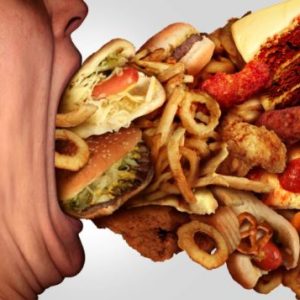
Experts from every corner of the food, nutrition and medcial universes have been telling us for years, how UPFs are hurting us – could even kill us. But that’s just the physical dimension. Science now says UPFs can directly harm our mental health…
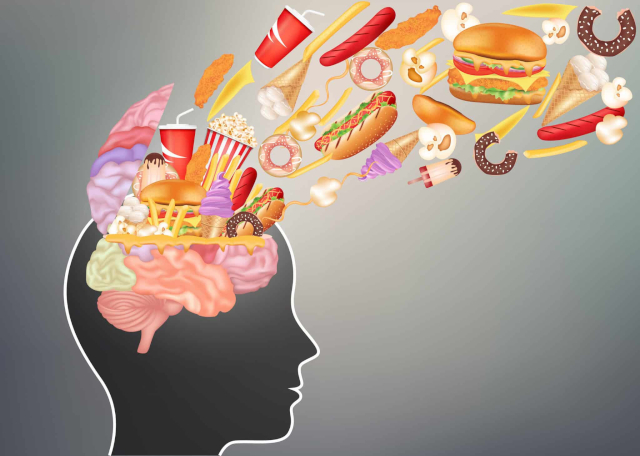
You stopped eating so much junk food, and you lost a little weight. And you’re aware you’re feeling more energetic. And that’s a happy thing. The world’s looking a little brighter. But you may be feeling better simply because you cut UPFs!
New science to make you smile…
Literally. The latest study on how ultra-processed foods (UPFs) affect your brain shows that the bad stuff in UPFs – and some of the good stuff you don’t get when eating too many UPFs – are both erod-ing your mental health.
Researchers at the University of California Fulton were curious abut he direct effects of UPFs on the brain. So they ran a small-scale, casual experiment – just to see if it was worth pursuing the issue in larger scale efforts. And they got a result that was worth publishing in its own learned paper, right off he bat.
The pilot study included only 20 people, but senior author Andrew Krystal, MD, Ray & Dagmar Dolby Distinguished Professor in UCSF’s departments of Psychiatry and Behavioral Sciences and Neurology, said it, “successfully established the viability of carrying out this research in a larger-scale trial.”
What they did
The participants had an average age of 44, and 70 percent were female. Along with depression, 14 of the participants also had anxiety. Everyone in the study had a high BMI (was overweight or obese), and at least one metabolic disorder – such as hypertension, diabetes, or elevated LDL (‘bad’) cholesterol.
Participants cut their intake of ultra-processed foods by more than 85 percent. Drastic? Yes. But such an extreme cut would definitely show up; any potential benefits that be revealed – albeit at lower levels – by larger surveys.
Ultra-processed foods include products such as packaged snacks, fast food, sugary drinks, and other industrially manufactured foods. These products may contain ingredients including preservatives, artificial coloring, flavor enhancers, and emulsifiers.
What they found
After doing so, the subjects showed moderate to large improvements across three different measures of depression. Anxiety scores also improved modestly.
“Reducing the amount of ultra-processed food in our diet can be challenging, because it’s highly palatable, cheap, and convenient,” said corresponding author Dr Nyasha Chagwedera, an assistant professor in the UCSF Department of Psychiatry and Behavioral Sciences. “Ultra-processed food triggers dopamine, the pleasure hormone, which promotes craving. Food companies work with scientists to find just the right amount of sugar, salt, and fat that make you want to eat more and more.”
The takeaway
Chagwedera, says one possible explanation for the connection between ultra-processed food and depression involves what she describes as a ‘leaky, out-of-balance gut’.”This gut damage can create low-grade, chronic inflammation throughout the body that either directly causes depression or makes people more vulnerable to it.”
“In other words, junky processing may harm your gut in ways that ripple up to your brain.”
The team is already designing its next study, which will ask the same questions on a much larger scale.
My take
I’ve suspected a direct link between the brain and junk food for a long time. I’ve seen the effects in people I’ve met – some I’ve known for a long time. I’ve witnessed their decline and fall. Folks in a hopelessly deep emotional hole who sit at home and eat junk food all day because they can’t get a job. And can’t afford proper food. I’ll bet a decent meal might do them more good than an hour with a Psychologist!
I can now say what I’ve thought for an equally long time but didn’t say. It’s finally official that Junk Food + Depression and Anxiety = a dangerous, potentially deadly Downward Spiral. And it doesn’t matter which comes first…
~ Maggie J.