
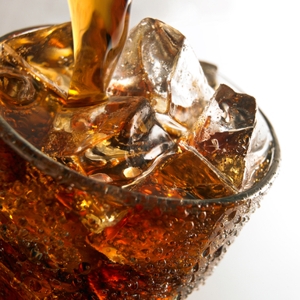
A new study reveals that diet beverages work just as well as water for weight loss, in spite of the official claim that water is your most effective option. Granted, that doesn’t take into account any adverse health affects artificial sweeteners may have…

Adding fuel to the fire…
One thing the new study’s findings do, beyond question, is to add fuel to the debate over the use of artificial sweeteners in UPFs and as table-top sweetening additions. Recent World Health Organiz-ation (WHO) guidance advised against the use of non-sugar sweeteners for weight control because of uncertainty in observational research. And that caution is supported by even more recent studies revealing new health issues with popular sweeteners Sorbitol and Sucralose.
Numbers don’t lie
But the hard facts discovered by the researchers from he University of Liverpool (UK) appear to be indisputable. And the science behind them seems sound.
What they did
A two-year randomized clinical trial followed 493 adults with overweight or obesity who took part in a structured behavioral weight management program, an abstract of the study report tells us. Parti-cipants were randomly assigned to drink either water or commercially available diet beverages each day. The amounts of sweeteners consumed remained well within established European Food Safety Authority (EFSA) safety thresholds.
What they found
Key findings included:
- Weight loss was similar between the NNS beverage and water groups after 104 weeks (−4.8 kg vs −3.7 kg; a nonsignificant difference).
- Both groups maintained weight reductions across the full two-year study, including during the final year when participants no longer received assistance.
- Participants in both groups experienced reductions in waist and hip circumference, along with improvements in body composition and several metabolic biomarkers.
- Researchers found no clinically meaningful differences in measures such as blood pressure and cholesterol linked to long-term consumption of either aspartame, acesulfame-K, or sucralose compared with water.
- Sugar intake fell in both groups, with a slightly larger reduction among participants drinking NNS beverages.
And that’s all good news.
The takeaway
Professor Jason Halford, University of Leeds and University of Liverpool, concluded: “This study provides the long-term clinical evidence that has been missing from international discussions. For people trying to manage their weight, non-nutritive sweetened beverages offer an effective alternative to sugar-sweetened drinks – and perform equivalently to water [even] over two years.”
My take
I think a lot of folks trying to lose weight or maintain weight loss already knew that diet beverages were an effective option to water. But the inescapable fact remains that we’re far from resolving the debate over artificial sweeteners and their potentially unhealthy effects.
I’m going to continue to follow WHO’s guidelines about the use of artificial sweeteners – until more-reliable results emerge from more-stringent studies…
~ Maggie J.