

Lots of jurisdictions are talking about it, but so far, only one seems to be doing anything about it. Food-forward California is revamping its freshness labelling reflecting updated, clarified wording helping consumers understand how safe their food is…
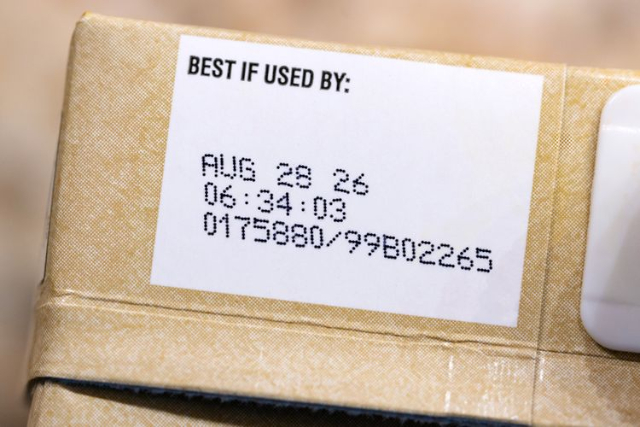
Regulators and consumers alike have been complaining, for years, that the existing, standard food-freshness and safety labels on packaged goods are inadequate. Mainly, they’re poorly understood by shoppers, who are becoming more concerned about the freshness and safety of their food.
‘Best Before’ vs ‘Expiry’
Surveys over the past several years have found tat consumers remain confused about the meaning behind ‘Best Before’ and ‘Expiry’ dates on food products. Especially the ‘Best Before’ concept.
Boiled down to its essentials, ‘Best Before’ means the food is probably going to start getting stale after that date. But it doesn’t mean it will be unsafe to eat. Maybe just a little less flavourful. And some harmless appearance defects may appear. But the food is still safe. ‘Expiry’ means the food could actually be unsafe to eat after that date.
Frustrated consumers and regulators have been calling for a revamp of food freshness labelling standards for some time, already.
Californians Against Waste (CAW) estimates the average American spends more than $1,300 a year on food that goes uneaten, often because confusing labels lead people to discard edible food. That’s a total of more than 6 million tons of wasted food per year in Califo0rnia alone.
What’s Cali doing?
California now requires all packaged foods to be labelled according to new standards that go beyond the old ‘Best Before’ dates. The biggest difference is, they use more words to help explain their mes-sage. And they’re mandated on all foods except baby formula and eggs.
The only two acceptable labels under the new plan will carry the wording: ‘best if used by’ and ‘best if frozen by’. No more ‘Sell by’ labels. They were actually meant to aid store operators in their stock rotation programs, not help consumers, anyway.
Waste is a plague…
“Food is the single most common material land-filled in California, and decomposing food and other organic waste in landfills accounts for 41 percent of the state’s point-source methane emissions,” CAW shared in a statement about the new law. “Methane [from decomposing food in landfills] is a potent greenhouse gas responsible for about 30 percent of the global warming that is now driving climate change.”
CAW sees the food waste picture from a global perspective: “Food systems inherently depend on natural resources, such as water, land, minerals, and fuel,” the statement relates. “As such, food systems directly impact our environment, and wasted food is fundamentally a squandering of the natural resources used to grow, process, distribute, and store our food.”
My take
I can’t take issue with anything CAW says. And I heartily endorse the organization’s thrust for better labelling, which prompted the labelling revamp legislation.
The ice has been broken. But two questions remain: Will other jurisdictions adopt the new labelling regime? And will consumers actually be – and feel – better-informed about the freshness of their food?
~ Maggie J.