
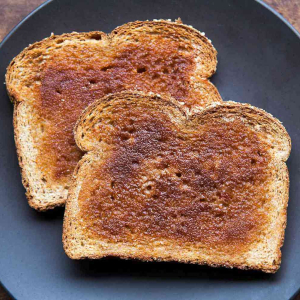
It wasn’t too long ago that researchers warned us against toasting bread too dark. The char was identified as potentially carcinogenic. But new research has revealed that the danger could be averted by genetic engineering. If we let it happen…
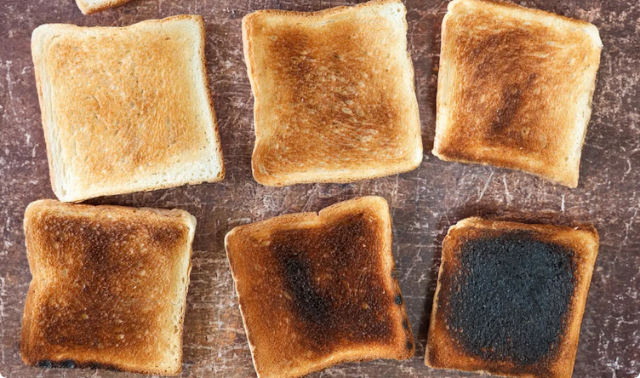 How dark is TOO dark? In the absence of gene-edited, aspragine-free
bread, that crucial question remains unanswered…
Unfortunate chemistry
“Wheat contains an amino acid called free asparagine, which the plant uses to store nitrogen,” The Guardian contributor Helena Horton relates. “When bread is baked, fried or toasted, this amino acid converts into a toxic compound called acrylamide, which scientists have classified as a probable carcinogen.”
Just stale bead?
But what is toast if it’s not piping hot, crispy, beautifully browned and imbued with the subtle umami amplification that a slight but definite char imparts? Sounds like a slice of stale bread to me…
But the danger increases the darker your toast is charred. So the majority of toast lovers aren’t really courting cancer – at least not from that source.
The solution…
The good news is… For those who love their toast ‘dark’, there is now a potential solution to the cancer risk problem.
Researchers at Rothamsted Research in Harpenden, Hertfordshire (UK) have successfully targeted the gene that produces free asparagine, reducing its production in the modified wheat strain by 59 per-cent. By also modifying a companion gene, the amount of asparagine can be reduced by an amazing total of 93 percent.
And on top of that, the scientists have observed no reduction in crop yields.
Cancer-free toast
The upshot of this discovery is that bread made from the gene-edited wheat would not develop cancer-causing chemicals when it was baked, fried or toasted.
Hurdles…
But there would, on the other hand, be the usual regulatory and consumer hurdles to leap before products made from modified wheat could be brought to market. Many jurisdictions have tough laws and regulations against selling genetically engineered foods.
And public sentiment remains strongly opposed to anything genetically engineered. The reasons cited by activists are many, and the debate is too hazy and fraught with misinformation to tackle here. Maybe in a post of its own, in the future…
My take
On the road to a future bereft of animal protein, where the masses will be forced to adopt a diet based on plant products, it’s sad to think that a potentially beneficial discovery such as toast-safe bread may never come to market. It’s a prime example of how misinformation, propaganda and just plain rumours can sink a stout ship before she’s even launched…
~ Maggie J.