
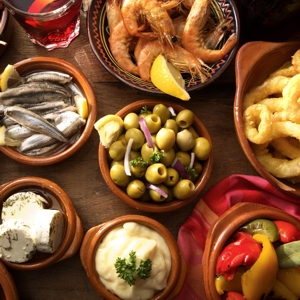
Tapas is as much a part of Iberian culture as Paella and Sangria. But most folks who’ve never been to Spain are unaware of how pervasive the custom is, and how deep its roots reach. Think: The Roman Conquest of 212 BC!
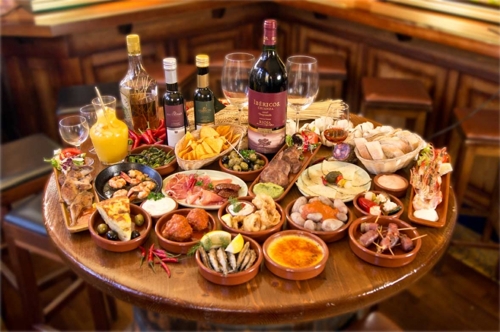 A typical selection of nibbles – at a smaller Barcelona Tapas bar…
Ancient roots
Tapas is not just food. It’s an ancient tradition and activity that goes back to the time the Romans brought olives and grape vines to Spain. And folks started to snack-away the long, lazy afternoons and evenings until it was time for their customary late supper.
Some 900 years later, as the Roman Empire waned, the Muslim Moors conquered southern Spain – which they called ‘Andalusia’, bringing almonds, citrus fruits, and a rich variety of spices.
In the 15th and 16th century, Spain’s infamous Conquistadors claimed great swathes of the New World for their Kings (and Queens), and brought back even more previously unknown foods, most prominently: tomatoes, potatoes, sweet and hot peppers, and maize (sweet corn).
All these contributions to Spain’s national pantry have found their place in Tapas culture…
A concept gels
It was during the Moorish reign that the concept of Tapas, as we know it today, started to come together. The official record is, unfortunately, pretty hazy on the evolution of Tapas over the next few hundred years…
The first record of modern Tapas-like dining dates to the 13th Century, when King Alphonso X of Castile was struck with a serious illness. His recovery was long and slow. And his physicians ordered him to take bite-sized snacks between meals to help build up his strength. Even then, a little red wine was part of the ‘prescription’.
Went viral
When folks heard what King Alphonso ‘the Wise’ was doing, everyone wanted to try it. Thus did the custom – and indulgence – of Tapas spread across the Iberian Peninsula.
What it is
‘Tapas’ refers to a wide variety of small, savory Spanish dishes, typically served with drinks in bars and restaurants It is a social phenomenon, in which friends meet, talk, snack and drink together.
‘Tapas’ is actually the plural of the name by which these nibbles are known. Each small plate, con-taining 4 to 6 items, is technically a ‘tapa’. In some places, each item on a plate is referred to as a tapa. The word comes from the old Spanish verb tapar (‘to cover’), originating from the tradition of placing a small slice of bread or meat over a drink to keep away flies.
Some folks take a quick look at a photo of Tapas dishes and think, automatically, of Appetizers. They couldn’t be further off the beam. Tapas are designed to be eaten at a leisurely pace, over a period of hours, over drinks. Appetizers are specifically designed to be the preface to a larger meal.
The closest thing North America has to Tapas is the classic ‘Game Day’ snacks and nibbles ‘layout’. But there’s very little overlap in the items on each menu.
Popular menu items
Marinated olives – sometimes spicy -are perhaps the most common Tapas menu item. Marinated Anchovies are also common, as are small fried sardines. Other single-ingredient Tapas include:
- Croquetas (small deep-fried dumplings),
- Patatas Bravas (spicy fried potatoes),
- Gambas al Ajillo (garlic shrimp),
- Calamares Fritos (crispy fried calamari),
- Empanadas (with various fillings; snack-sized),
- Jamón de Ibirico (Iberian Ham),
- Albóndigas (meatballs),
- Chorizo (sausage) Bites, and
- Tortila (a thick vegetable-studded Spanish omelet, cut in small pieces).
Not to mention Pintxos – small skewers built on long wooden toothpicks, typically incorporating olives, anchovy fillets and pickled peppers…
Food & Wine offers a tableau of 25 popular Tapas dishes, each with an authentic recipe…
My take
I don’t know which I love more… The classic Tapas nibbles themselves, or the ancient and beloved custom of Tapeo (‘going for Tapas’), and all it embodies.
We would do well to adopt the classic Tapas culture here in North America. I predict heart attack and stroke rates would decline dramatically… And we might finally get to know our neighbours!
~ Maggie J.