
It’s not often you see such a bold, confident, impactful headline as the one above on a serious, peer-reviewed scientific journal report. But the team behind a new study on obesity says it’s fully justified! They may have uncovered the ultimate obesity ‘on-off switch’…

Scientists have uncovered a surprising secret hidden inside fat cells that could reshape how we think about obesity and metabolic disease. A protein called HSL, long believed to simply release stored fat when the body needs energy, turns out to have a second job deep inside the nucleus of fat cells – helping keep those cells healthy and balanced…
The downside
But there’s a downside to the presence of HSL: People and mice missing this protein don’t become obese as expected; instead, they lose fat tissue in a dangerous condition called lipodystrophy.
What they found
The team from Université de Toulouse (UdeT) (France) says it’s the most important finding in obesity science since the 1960s. Their findings, published in Cell Metabolism, helped solve a long-standing mystery in obesity research and opened new directions for understanding diabetes, heart disease, and other metabolic disorders.
They found that HSL doesn’t just exist on the outer layers of fat cells; it’s also found inside the cell nucleus, where it influences the actions of the cell’s ‘control centre’.
In the cell, generally, HSL ‘acts as an enzyme that helps release stored fat during fasting or exercise. In the nucleus, however, it appears to work more like a regulator that helps maintain healthy adipose tissue’.
In the nucleus, ‘during fasting, adrenaline activates HSL and pushes it out of the nucleus so it can help mobilize fat stores’. Thus making fat available as fuel to energize the body and generate body heat.
A proper balance of HSL produces a healthy body; neither over- nor under-weight. An imbalance between the nucleus and the outer layers of the cell can produce either obesity or lypodystrophy.
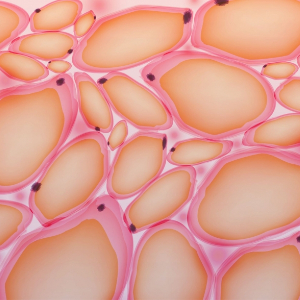
But Langin also notes that the adipose tissue (inside the abdominal wall, among the organs) (See photo, top of page.) is also a complex endocrine organ that communicates with the brain, liver, mus-cles, and immune system through hormones and signalling molecules. Dysfunctional fat tissue can disrupt the body far beyond weight gain [or loss] alone.
“Instead of simply trying to eliminate fat, future treatments may focus on restoring the normal funct-ion of adipocytes and protecting the biological systems that keep fat tissue healthy in the first place,” an abstract of the study report suggests.
My take
I think we’ve reached the point in investigating obesity that ‘all is beginning to come clear’. Such sit-uations usually start by revealing that the solution to the problem isn’t as simple as it first appear-ed. In this case, simply trying to reduce weight or trigger the burning of more fat.
I agree with Dr Langin, that knowing more about HSL is the key to understanding how the ‘obesity machine’ works. And once we know that, we can formulate treatments that focus on maintaining a healthy, moderate adipose tissue mass…
~ Maggie J.