
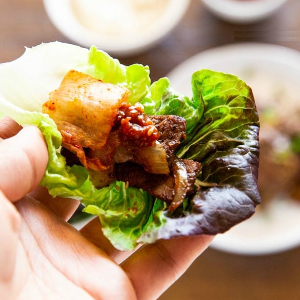
‘Bulgogi’ should sound familiar to faithful readers of the Fab Food Blog. It’s sort of a pet project of mine. I’m still trying to popularize it among Western diners. Without ruining it. Bulgogi is a rich, deep, flavour-ful, mild Korean grilled Beef dish…
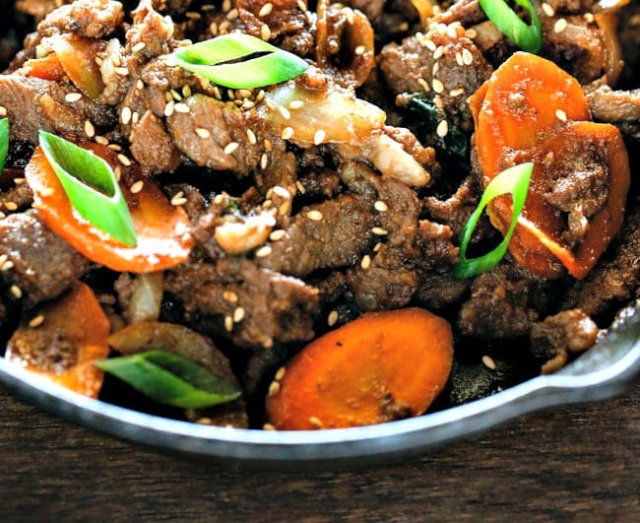
Bulgogi is extremely versatile, in tune with most classic Korean dishes. You can serve it over noodles or rice; in a soft, brioche-style Korean bread roll (the most popular presentation); or straight from the grill, wrapped in a fresh lettuce leaf, and garnished with toasted sesame seeds and chopped scallions (green onions). See photo, top of page.
The flavour’s the thing…
Most folks who know Korean food remark on Bulgogi’s flavour, first. It’s prepped in a traditional mar-inade that features more ingredients than the rest of the dish put together. But it serves as a basic, streamlined listing of classic Korean ingredients everyone interested in peninsular cuisine should know:
-
- 6 tbsp 90 ml soy sauce
- 3 tbsp / 45 ml brown sugar
- 2 tbsp / 30 ml mirin (Chinese cooking wine)
- 1 Asian pear or red apple (5.5 oz. / 155 g)
- 1/2 onion (2.8 oz / 80 g)
- 1 tbsp / 15 ml minced garlic
- 1 tsp / 5 ml minced ginger
- 1/8 tsp / 1 pinch ground black pepper
For the beef…
You’ll need:
-
- A carrot (peeled, cut into 2 in. / 5 cm lengths, and julienned)
- 2 scallions
- 1 medium onion (slivered)
- Sesame oil
- Sesame seeds
- a little neutral-flavoured cooking oil
Recipe contributor Sue Pressey has Korea in her blood, literally. And that means ‘spare no effort to get the best ingredients you can’. She recommends using ribeye for her Bulgogi. But any beef steak you can cut across the grain will work. And remember, you’re marinating it…
Sue has one really great tip for slicing the beef paper-thin – just like you would for Fajitas, Gyros, Japanese Gyudon, Mongolian Beef, Shawarma or Philly Cheesesteak. It’s so simple I’m embarrassed I didn’t think if it myself. Freeze the steak, tightly wrapped in plastic film, until it’s still just pliable – then slice away as thin as you want, without the meat squirming, deforming or tearing. One caveat: Let it come to room temperature before starting marination.
Multitudinous variations…
Sue also suggests some ‘starter’ variations on Bulgogi presentation. They range from classics as old as Bulgogi itself to modern, even newstalgic applications you’ll definitely want to try:
-
- Bulgogi Spring Rolls (Perfect party finger food)
- Bulgogi Tacos (Great for DIY party)
- Bulgogi Rice Burger (Learn how to make rice buns as well!)
- Bulgogi Pizza (The most popular pizza in Korea)
- Bulgogi Jeongol (aka Korean Beef Stew)
- Chicken Bulgogi (If you prefer chicken)
My take
Sue offers all sorts of tips and hacks to make her Bulgogi not just authentic but special. A number of them are actually staple procedures and techniques of traditional Korean cooking.
She’s also the author of 2 Korean cookbooks, including Your Ultimate Guide to Authentic Korean BBQ at Home, and the proprietor of an online Korean culinary supply house…
Meanwhile… Happy Bulgogi-ing!
~ Maggie J.