
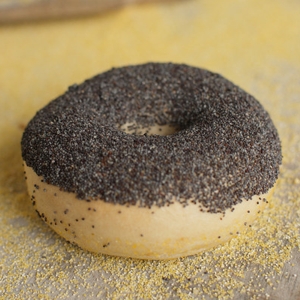
You could be arrested and charged with drug smuggling if you enter South Korea with any kind of food product that contains poppy seeds. The Koreans have an ultra-strict anti-drug policy. And US officials are rushing to warn travellers…
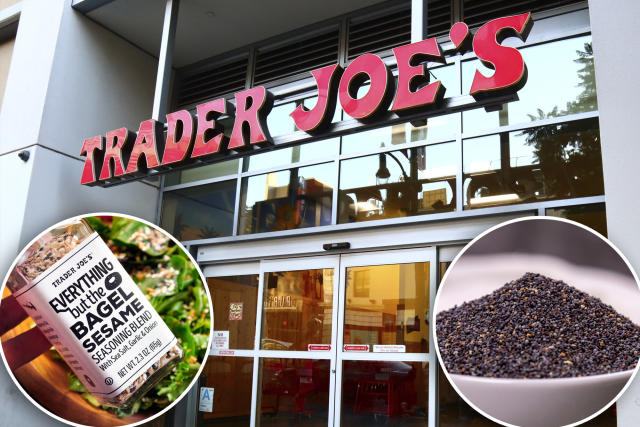
When you land at Incheon International Airport – the one that serves Seoul, South Korea’s capital – you’ll be greeted by a barrage of signs warning you ditch any products you may be carrying that contain poppy seeds. It’s an extreme, but nonetheless official stipulation of the country’s stiff anti-drug laws.
Zero tolerance
South Korea – like many Asian countries – has enacted anti-opiate laws that we in the west might consider extreme, to the point of being ridiculous. The problem is that all poppy seed products contain tiny traces of opiates detectable by today’s ultra-sensitive lab tests. And if you fail the test, you may face some pretty severe consequences including large fines and even jail time.
The issue is huge in South Korea, because Trader Joe’s is huge across ‘free’ Asia. Tote Bags imprinted with TJ’s logo are prized by fasionistas in Japan who’ve adopted the ‘American casual’ style. And South Koreans have developed an insatiable taste for TJ’s Everything But The Bagel seasoning. Which contains poppy seeds.
Alas for fans, importation and sale of the TJ’s product has been banned. And customs inspectors keep an especially sharp eye out for it when going through arriving passengers’ baggage.
Some history…
We first encountered the poppy seed problem back in 2013. A Pennsylvania mother who ate a Poppy Seed Bagel shortly before she gave birth tested positive for opiate drugs on a routine post-delivery urine screen. And had her newborn taken from her by child welfare agents without explanation. Zero tolerance strikes again.
The hospital finally admitted that the test result was a false positive and the little girl was returned to her parents five days later. But imagine the trauma and confusion for both the parents and the child at this critical time of bonding! No amount of money could ever compensate the family for that. Nevertheless, the family filed a lawsuit – not against the hospital, but against the child welfare agency – and won big.
Science has an answer
Fortunately for poppy seed lovers, science has found an answer. A new variety of poppy has been developed whose seeds don’t contain opiates.
Fuerst, Day, Lawson Ltd. (FDL) of London (UK) has developed a poppy peed that has all the flavour but only a tiny faction of the morphine in regular poppy seeds. Regular Poppy Seeds have about 900 parts per million (ppm) of morphine, plenty to trigger a drug test failure. But the new FDL seeds have only about 20 ppm of morphine, which the company says is highly unlikely to cause a test failure for opioids.
Still your responsibility
We haven’t heard much lately about the commercialization of the FDL poppy strain. But I suspect it will take at least a few more years for it to enter production in any significant volume.
Meanwhile, it’s still your responsibility to be aware of local and international laws and regulations regarding opiates. And when in doubt, always pass up the poppy seed bagel in favour of something less problematic…
~ Maggie J.