

Sounds crazy… But it could come to pass! Think of all the coffee grounds average folks, coffee shops and restaurants throw out every day! What if we could repurpose coffee grounds – in a way what would benefit both the economy and the climate?
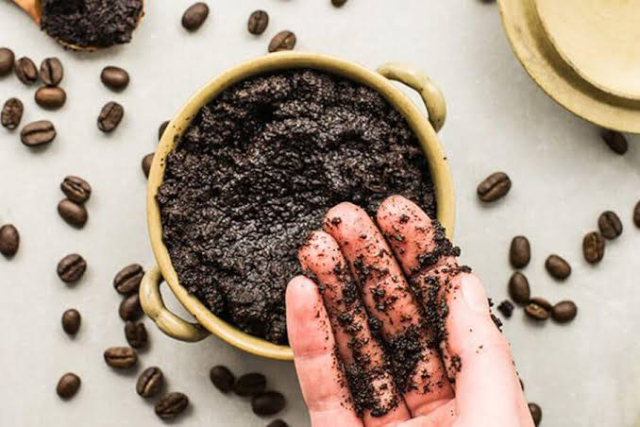
They call it ‘biochar’. It’s the material that’s left when wet coffee grounds are flash dried and reduced to their elements by a super-hot plasma flame. And the product has applications far beyond provid-ing a clean-burning future bio-fuel.
Chump to champ
The plasma process turns coffee grounds into a charcoal-like material that can potentially be used as a fuel, a water or air filtering agent, and in industrial waste treatment processes. And the plasma pre-paration process is generates very few pollutants itself.
The stakes are high…
“People generate more than 10 million tons of used coffee grounds each year, creating a unique type of everyday waste that’s hard to know what to do with,” Korin Miller writes, in Food & Wine. “Most coffee grounds end up in landfills, where they take up space and don’t do much.”
The biochar process is explained in detail in a new study published in the Chemical Engineering. Exposing coffee grounds to a 1,600 degree flame triggers what the researchers call a ‘popcorn effect’, expanding the material into a ‘puffed’ form. As such, it can absorb contaminants just like activated charcoal, in water, air or soil. But it can also be easily converted into a clean-burning biofuel similar to barbecue charcoal, with a higher heat output than wood.
Trapping CO2
Perhaps one of the most important contributions biochar could make to the world is trapping carbon dioxide and removing it from the atmosphere. That could make a real positive difference in the clim-ate change picture.
But that would require massive up-scaling of the plasma process funded by private concerns which could see a way to benefit financially. While the researchers behind the study say that would be fairly easy, they don’t provide any specific suggestions or blueprints.
My take
Here we have a largely unheralded scientific breakthrough which could make a real difference in all our futures.
Clearly, the next step is to get interested commercial parties on board… And to do that, we all need to start talking-up this extraordinary opportunity to implement a global-magnitude win-win-win waste solution…
~ Maggie J.