

Blueberries are an acknowledged ‘superfood’. Doctors at Dalhousie University want to prove blueberries deliver a real, quantitative benefit to heart health. Then, they can argue that more physicians should be prescribing ‘therapeutic’ foods…
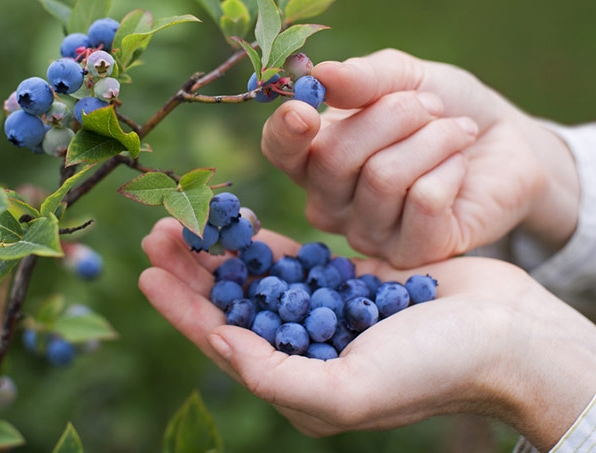
Blueberries have been touted as a superfood for quite a while, now. I eat 1 cup / 250 ml or more of them every morning. And I can attest to the positive difference they’ve made to my physical and emotional wellness.
But the new movement, around designing optimized, individual diet and wellness plans, has given the blueberries renewed traction.
That going on?
Researchers at Dalhousie University are studying the effects of personalized diet and exercise re-gimes on the health and wellness of older folks. Sounds like a pretty mundane exercise. You might say ‘academic’. But there’s more to it than that.
The team is prescribing blueberries as part of all subjects’ routines, specifically to determine how a daily dose of blueberries – presented in a breakfast smoothie infused with other healthy stuff – can help protect people with a history of heart disease.
The other angle of the study involves testing out their concept of ‘prescribing foods’ to improve access to, and affordably of nutritious foods.
What they’re doing
The researchers are monitoring a small group of subjects who they’ve placed on specific, personal-ized diet and exercise plans. Hard, quantitative data are record every day, for every activity and every food the subject consumes. It will be the first such study of its kind. And is intended as a ‘proof of concept’ demonstration to justify larger studies, which would produce larger data pools, from which researchers can draw firmer conclusions.
Prescribing food
It’s an emerging trend among visionary physicians in a few ‘clusters’ across Canada and the US. The idea is to issue official prescriptions for therapeutic foods – such as blueberries – to folks who need them, but can’t afford to just go out and buy them, our their own incomes.
Prescribing foods can get them paid for, at least in part, by some public and private health and bene-fit plans.
My take
What a great idea ‘food prescribing’ is!
When my doctor put me on a daily iron supplement, she asked me how much my go-to pharmacy charges for dispensing fees on each prescription. She wanted to do the math and see if prescribing the iron would save me money over buying it over the counter. That’s not an issue since I turned 65. All my prescriptions are now paid for (minus a minimal co-pay) under a government benefit plan.
But prescribing foods – especially for older folks and those who are living on low or fixed incomes – could go a long way to ease the stress of making ends meet, financially.
~ Maggie J.