
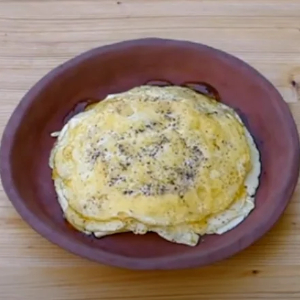
It’s a classic Italian favourite you almost never hear about outside of Italy. But it’s a recipe/technique you should know if you love eggs and crave different presentations. Ova Spongia traces its roots all the way back to ancient Rome!
Ovo Spongia ex Lacte is, literally, an ‘egg sponge with milk’. Which we now commonly refer to as an omelet. And you thought the French created the classic form! It came to them from Italy – along with many other culinary and food service conventions – via the Romans, and later by King Henry II’s fam-ous Italian queen, Caterina de Medici.
The soul of simplicity
It’s made with just a few ingredients: eggs, milk, olive oil, honey, and black pepper. That (mostly) fam-iliar combination creates a light, spongy, sweet-and-savory omelet. And you’ve likely never seen one rise so high!
The modern recipe…
… Is pretty much the same as the ancient prescription. But researchers have made some minor ad-justments to accommodate the 21st Century palate. And translated the ancient cooking measures into something we can relate to.
What you need
All you need – today as in pre-Christian times is:
4 eggs
250 ml milk
2 tbsp. olive oil
honey (to taste)
black pepper (to taste)
But the procedure is almost more important than the ingredients if you want to achieve a true, towering Ova Spongia…
What you do
Beat well the eggs and mix with the milk and a bit of olive oil.
Pour olive oil in a pan. When it is hot, add a ladle of the egg mixture.
Cook the ova spongia until done, without turning them.
Plate the omelettes drizzling them with honey and dusting with ground pepper.
Tips and hacks…
Whisk as much air into the egg mixture as you can, to ensure optimum ‘spongy’ results. This recipe uses no stabilizers or starches to help support the sponge.
Use the old, standard toothpick test to determine when the sponge is ‘done’ in the middle. Take it off the heat too soon, and you risk it falling – like an over-hasty soufflé.
Heat the olive oil only to medium low. Otherwise, the omelet won’t rise to its full potential before the bottom overcooks. And it will be more likely to stick.
If your honey is solid, or really thick, heat it in a small stainless steel bowl siting in hot water to rend-er it drizzlable.
Freshly ground, fine black pepper makes all the difference in this dish! The natural flowery, savoury nuances of fresh pepper are a magical foil for the umami sweetness of the honey.
Experiment with the honey and Black pepper, adding in small amounts, until you reach the swavoury flavour profile most agreeable to your palate.
My take
This is a fun, exotic take on the ubiquitous omelet that brings an ancient favourite full circle. It act-ually newstalgizes our ‘standard’ omelet, with the honey and black pepper…
And please do consider this novel little piece of history as a dessert, too. You can top it with lots of other things in addition to the honey and pepper!
~ Maggie J.