

Law enforcement types say all crimes share three prerequisites: means , motive and opportunity. Motive appears to be the strongest of those factors in the recent spike in supermarket thefts. Specifically, self-checkout ‘heists’. Blame it on unrelenting high food prices!
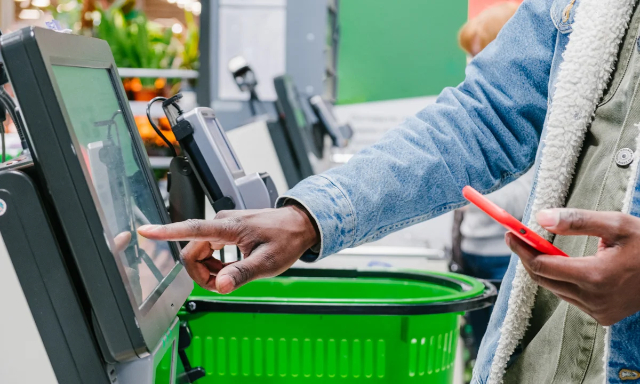
I can’t believe the first self-checkout kiosks appeared in supermarkets almost 40 years ago! They were supposed to cut store costs – by letting them cut staff. They were supposed to get customers out of the store faster – avoiding cashier lineups. And they were supposed to be more secure.
They’ve certainly resulted in the presence of fewer checkout staff. It remains questionable whether they help shoppers get out of the stores faster. But just about everybody agrees, self-checkouts haven’t made the process more secure.
An upsurge in ‘fraud’
You think of it as theft, but technically, sneaking products past the scanners is actually a form of fraud… Consider these ‘Fast Facts’ about self-checkout theft:
- New data from LendingTree shows a sharp rise in self-checkout theft, with 27 percent of users admitting to intentionally not scanning items as grocery costs continue to increase.
- Lower-income shoppers and younger generations are most affected by economic pressure, driving higher theft rates and shifting attitudes about what constitutes stealing.
- Retailers are responding with AI monitoring and weight-based technology, yet many shoppers say getting caught does not deter them as food insecurity and budget strain deepen.
Walmart CEO Doug McMillon says store thefts, “are higher than what they’ve historically been.” Many staff and customers link the phenomenon to self-checkouts. On top of that, front line supermarket staff say the machines have made their lives more frustrating, rather than less.
Survey says…
The LearningTree survey also revealed the number of shoppers who now admit to not scanning items represents a hefty 12 percent rise from just 2 years ago. And there’s more: Of those who those who admitted cheating the checkouts, 47 percent cited ‘unaffordable essentials’ as their primary reason, while 39 percent said prices were ‘unfair or too high’.
The survey also reveals a definite lack of remorse among offenders. Almost half – 46 percent of self-checkout users – say they’ve purposefully taken an item say they’ve been caught, yet 31 percent don’t feel remorseful. In fact, 55 percent of those who’ve deliberately stolen at self-checkout say they think they’ll do it again.
“People have watched prices rise for years, and often see retailers’ profits continue to rise, too,” said Matt Schulz, LendingTree’s chief consumer finance analyst. “They feel like if they walk out of a store without paying for a loaf of bread or a pint of ice cream that it won’t even amount to a rounding error for that company, but it could help make their life a little easier.”
My take
My biggest problem with ‘the cheating the fat cats’ rationalization is, it ignores the hard fact that, in the end, supermarket theft just makes prices higher for all of us.
Supermarket chains spend millions putting up fences between pre- and post-checkout zones. They institute new electronic scanning and weight-based technology – even make you scan your receipt when leaving the store – to ensure you have paid for your purchases.
Because they are beholden to their shareholders, who demand that dividends and earnings keep rising in spite of the stormy economy.
Given the survey results shared above, I see no end to checkout fraud – probably a further increase – unless food prices are reduced dramatically.
~ Maggie J.