

Every week, it seems there’s another study out there about the danger from microplastics to our health. They’re classed as ‘forever’ pollutants which build up in our systems, potentially causing serious consequences…
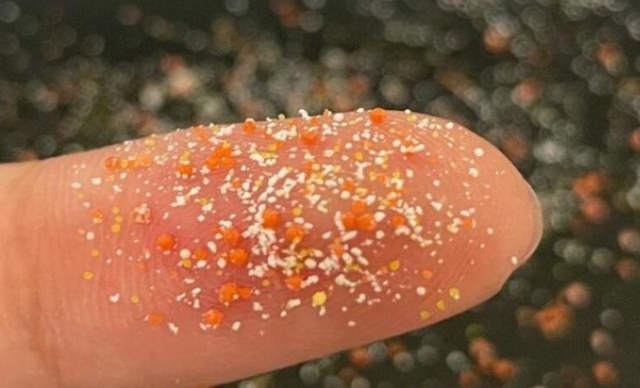
The latest such studies show that the little barely-visible particles are collecting uncontrolled in every organ in our bodies – most troublingly in our brains…
Kitchen exposure a major concern
Dr Lisa Erdle — a biologist, ecotoxicologist, is the Director of Science and Innovation at the 5 Gyres Institute, a nonprofit focused on reducing plastic pollution. She notes that recent research has shown that microplastics particles are definitively linked to, “oxidative stress and inflammation as well as endocrine disruption, cardiovascular disease, and dementia.”
Erdle points to one such study, published in the peer-reviewed journal Heliyon, which found that home-kitchen items such as food preparation tools, cookware, and food storage options may be a significant contributor to microplastics exposure.
And Erdle says, while more research is ongoing, “at this point, we already know enough to act.”
So what can we do to limit our exposure to microplastics while working in our kitchens?
5 changes we can make
There are 5 areas where we can at least make inroads in reducing our exposure to microplastics…
Switch out plastic cutting boards…
… In favour of wooden cutting and preparation surfaces. Folks have been using wooden cutting boards. chopping blocks and counter tops for hundreds of years – with no notable ill effects. Plastic prep surfaces were briefly championed over wood. Some folks thought plastic would absorb fewer conta-minants and would be easier to clean and sanitize.
Then others noted that, every time you run a sharp knife blade over a plastic prep surface, you’re freeing up small or already ‘micro’ particles of plastic into the food and your kitchen environment. And knife cuts or abrasons in plastic surfaces may trap and hold who-knows-what plastic particles or biohazards…
Trade plastic cooking utensils…
… For stainless steel, wood, or silicone. Some of these substances (steel) either won’t break down as easily as plastic under cutting, abrason or other physical abuse. Others will break down as easily, or more so, than plastics but won’t shed microparticles that are as dangerous or long-lasting in the environment as hard plastics.
Ditch non-stick coated pans…
… For traditional cookware. Most traditional and ceramic non-stick coated cookware sheds something into your food every time you use a metal or very-hard plastic utensil on it.
Those coatings – especially those from the ‘Teflon’ family – are relatively soft, and subject to mecha-nical damage. Damaged coatings can release particles directly into your food or indirectly into the environment. They can also release potentially cancer-causing fumes into your kitchen when heated above a certain temperature.
Traditional, non-coated cookware can be rendered ‘non-stick’ with appropriate pre-cooking ‘season-ing’ or other preparation.
Swap single-use plastic wraps and bags…
… For reusable alternatives. Not that heritage storage vessels including the venerable original, Tup-perware, are necessarily any safer than more modern fridge or freezer bags in the long run… But at least they can be cleaned more easily. And they’re (conveniently) stackable.
Bags and wraps are generally made from varying thicknesses and densities of polyethylene. Some, including those annoying, problematic fold-top sandwich bags, may be made of other stuff that could pose various kinds of pollution. Nevertheless the poly bags are most vilified for their tendency to be used once and tossed – never cleaned, much less re-used.
Replace microfibre towels…
… With cotton alternatives. Cotton has a couple of obvious advantages over microfibre towels and scrubbing cloths. It’s softer, more absorbant and more flexible. And that makes it less likely to scratch or abrade other pieces of kitchenware. It’s not the damage that microfibre towels can do to other objects that’s the primary issue here, but the bits of microfibre that can break off into food or the environment under medium to hard use that can pose a danger…
My take
I agree with experts such as Lisa Erdle that further research needs to be done into microplasics. Maybe a lot of it. But I also agree that, “we already know enough to act.”
When I reflect on the damage all those nasty little microplastic particles might already be doing to my heart, gut and other organs – much less my heart and brain – I’m all the more motivated to take steps to minimize my exposure to the stuff…
~ Maggie J.