
I thought everybody knew this. But I guessed I was. Then, I realized that, as a trained food-service person, I have a different view of the fridge than most folks. And everybody should know about the fridge’s various temperature zones…
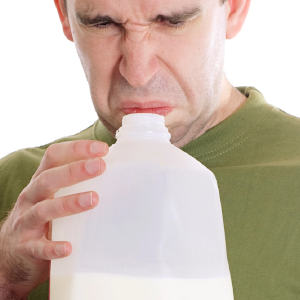
 … But where do you put the milk?
Foodservice professionals know that, the lower the shelf, the colder it is. And that fundamental is the reason we observe rules for the placement of certain foods in the fridge according to how temper-ture sensitive they are…
What about the door?
You may have noticed that the infographic above doesn’t take into account the in-door storage in all modern home fridges. Because commercial fridges and cold rooms don’t have door storage.
So, what’s the rule for fridge doors?
There’s another old rule that says you shouldn’t keep the fridge door open too long. That’s because every time you open the fridge, cold air falls out of the bottom of the storage compartment, and warm room air moves into the top. And the fridge has to work harder to replace that cold air – which is what keeps the food in it safe from spoilage.
And every time you open the fridge, the cold air in the door storage gets completely flushed out. Therefore, you should consider the door the least temperature-stable, and warmest place in the fridge.
What should you store in the fridge door?
AI is relevant and useful in at least one way… Google AI searched all the leading online information sources (in about 2.5 seconds) and compiled the following list of foods you can safely store in the door:
- Condiments: Ketchup, mustard, mayonnaise, barbecue sauce, and hot sauce. These items have high acid, salt, or sugar content, which naturally stops bacteria from growing.
- Pickles, Olives, and Relish: These are heavily brined or pickled in vinegar, making them very stable.
- Jams, Jellies, and Preserves: High sugar and acid levels protect them well.
- Salad Dressings: Vinegar- or oil-and-vinegar-based dressings handle door temperatures fine (though creamy or egg-based dressings should stay on an inner shelf).
- Drinks: Soda, sparkling water, and commercial juices that are meant to be chilled.
- Certain Sauces and Syrups: Soy sauce, hot sauce, and maple syrup (after opening).
- Nuts and Seeds: Some people store nuts, seeds, or dried fruit in the door to keep them slightly cooler than a pantry without freezing them out.
What should you never store in the fridge door?
- Milk and Dairy: Milk, cream, and yogurt spoil much faster in the door.
- Eggs: Frequent temperature shifts can cause eggs to age or rot quicker.
- Butter and Soft Cheeses: While butter is commonly put in the door compartment, it stays fresher and firmer on a main shelf.
- Raw Meats, Poultry, and Seafood: These require a consistently cold temperature for safety, and storing them in the door risks dangerous drips.
- Leftovers and Prepared Foods: These need the coldest zones to prevent rapid bacterial growth.
My take
Now you know why it’s unsafe to store any particularly temperature-sensitive food in the fridge door.
And, given the cost of energy these days, you can also appreciate how important it is to keep the fridge door closed, unless you have to open it ‘on business’. Which also brings to mind the appliance service tech’s caution to keep the fridge door seal clean and tight. So that precious cold air doesn’t leak out unnoticed…
~ Maggie J.