
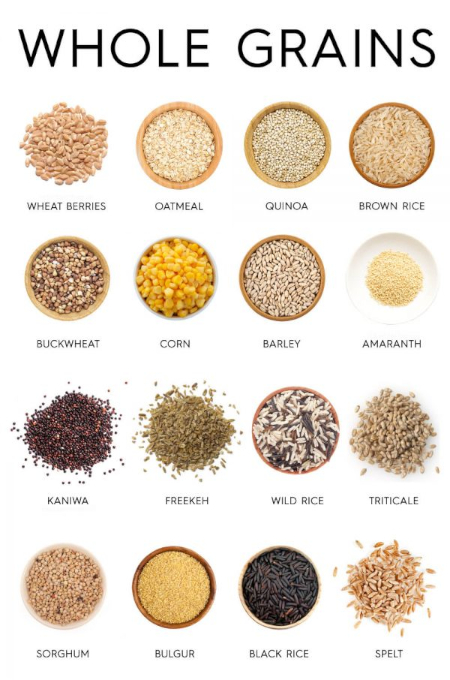
I’ve become a big supporter of whole grain products. The more I explore, the more I like them. There’s a great variety available in just about every supermarket, now. And among the horde, there are many that are 100 percent whole grain with few or no additives…
I’ve recently adopted a new health-conscious’ diet. I know that sounds ominous. But I still make and consume the dishes I love, and new ones I’m tempted to try. It’s just that I’ve cut down on ‘bad stuff’ and UPFs. And added some conspicuously ‘healthy’ menu items…
What I’ve dumped…
I’ve totally cut UPFs from my shopping list since the begin-ning of this year. And it wasn’t nearly as hard as I thought it would be. I can only assume that I was not as heavily addicted to their salt, fat and sugar as I thought I was!
I’ve also simplified my daily eating regimen, moving lunch to British ‘Tea Time’ (around 3 pm), ditching my former big, heavy supper, and scheduling a snack around 8 pm. That usually con-sists of some fruit (tree fruits and berries; occasionally a ba-nana), a whole-grain Tortilla rolled up with peanut butter, and a non-caffeinated beverage. (often just water, from the filter jug).
And I pretty much quit drinking almost 2 years ago. Not because my doctor warned me I was short-ening my life, or anything like that. But because a day came when the first sip of my favourite wine tasted bitter.
What I’ve added…
Key elements of my new nutritional regime include a daily dose of circumin (the active ingredient in Turmeric) which is a powerful anti-inflammatory. It’s also supposed t0 help ward off arthritis, support gut health, and regulate blood sugar. All factors that become more and more important as you age. Boosters also claim circumin also elevates levels of brain chemicals such as serotonin and dopamine, potentially easing symptoms of mental fatigue, stress and depression.
After covering a recent story about the almost miraculous results researchers saw after prescribing blueberries for test subjects, I’ve also added a daily dose of that superfood to my routine. I eat a cup / 215 ml of whole berries every morning, often alongside a breakfast burrito containing scrambled eggs and a variety of sautéed veggies. I may opt for oatmeal porridge or some other whole grain product on the coldest days.
But the biggest change in my daily dining routine has been switching to all-whole grain products…
What I’ve been doing…
I’ve been varying my whole-grain product consumption, trying some new things I haven’t bothered with before. Items not in my cultural or personal wheelhouse.
For the first time since my my age was measured in single digits, I recently tossed a handful of barley groats into a quick soup I was making. I was tired of rice and noodles, and the buckwheat was there… What a great changeup from the usual! Buckwheat has a wonderful, sweetish, nutty flavour that adds body to any soup or stew. It also do0nates starch to the dish, which helps create a rich glossy, saucy broth…
I’ve also been experimenting with Buckwheat. My Dad often made buckwheat pancakes with butter-milk for Sunday breakfast when I was little. The flavour was hard to describe – but incredibly delici-ous! And when you go to Google, you find a whole pantheon on buckwheat dishes, many hailing from Eastern Europe and Scandanavia.
“In Russia and other Eastern European countries, the word ‘kasha’ can refer to any kind of boiled porridge made from various grains like wheat, barley, millet, oats, or rice,” The Spruce Eats tells us. But it is, first and foremost, a buckwheat dish. And Kasha can be ploughshared into pasta dishes such as, Varnishkes, knishes, Polenta Nera, and an array of buckwheat sides including croquettes and fritters.
And I couldn’t leave quinoa out of this list. Like buckwheat, it delivers a complete dietary protein without having to pair it with a grain or bean. It’s easy to prepare, and features a wonderful nutty flavour. And it’s a major storehouse of vitamins, minerals and other essential nutrients!
How much is enough?
There is almost as much debate about how much whole grain food you should consume each day, as there is about what foods are ‘best’. But we have a new guideline from a study published in the Sept-ember, 2026 edition of the European Heart Journal.
Dr Helda Tutunchi from the Tabriz University of Medical Sciences, Iran, says: “We systematically com-bined and analyzed all available randomized controlled trials [87] to identify the amount of whole grain associated with the greatest benefits. […]
An abstract of the study report says: “Benefits were already apparent among people consuming 30 to 40 grams of whole grains per day (dry weight). However, the strongest effects were generally ob-served at 60 to 100 grams per day. That amount is equivalent to about four to six servings of whole grains daily. In practical terms, that could include a bowl of oatmeal, a sandwich made with whole grain bread, and a serving of brown rice.”
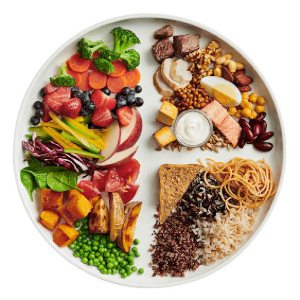
Canada’s Food Guide (see photo, top of page) recommends you cover at least 1/4 of your dinner place with whole grain foods. The findings of this new study suggest most of us should be consuming even more!
My take
It appears that the amount of whole grains you eat is more important than the type(s) you choose. Try them all, and embrace the grains and preparation techniques you prefer!
But do add more whole grains to your daily eating routine. They’ll do you a world of good! The Iranian survey of previous studies also revealed, “improvements in body weight, waist size, blood pressure, cholesterol, blood sugar, triglycerides, and some markers of inflammation.”
~ Maggie J.