
When you think Japanese food, you probably think first of ‘Sushi’. It’s the national dish, but it’s just one dish. The national cuisine of Japan is Washuko. And it’s been named as a world heritage culinary treasure by UNESCO…
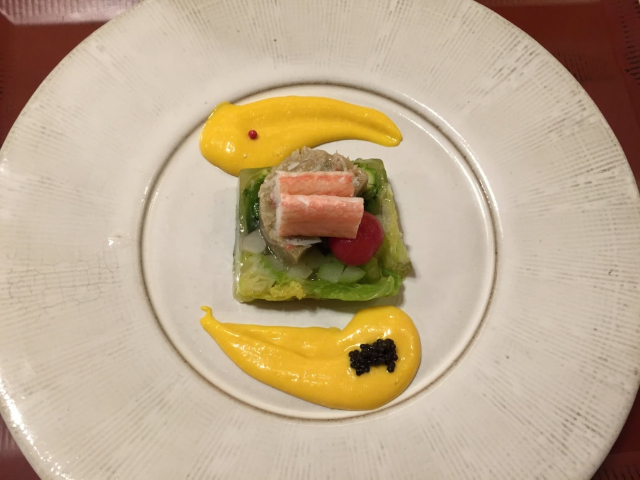 A classic Wakoshu plate: All things in harmony – colours,
flavours, land and sea. Even Yin and Yang…
Japanese food culture is rich and varied, and very different from the Mainland Asian traditions from which it springs. As an island nation, Japan relies heavily on fish and seafood, but is also famous for unique foods such as Wagyu beef and Shiitake mushrooms…
What’s in the name?
Literally meaning ‘food of Japan’ or ‘harmonious food’, Washoku combines two written characters:
-
- wa, which literally means harmony, and is often used as a prefix meaning ‘all things Japanese’, and
- shoku, meaning ‘food’ or ‘to eat’.
Indeed, the concept of ‘harmony’ underlies all aspects of Japanese culture, not only its cuisine…
Delicate, elegant, understated…
Japanese food has a reputation as being delicate, elegant and understated. But it’s not all that way. The Washuko tradition spans mild to spicy, land to sea, and delicate to bold.
But it’s based on deeply-rooted moral and ethical principles that are characteristic of Japanese society as a whole:
-
- Respect for Nature and Fresh Ingredients (Shun): Utilizing diverse local ingredients from Japan’s central mountains, fields, and oceans while honoring the life of plants and animals.
- Nutritional Balance (Ichiju-sansai): Composing meals around healthy structures like ichijū-sansai (one soup and three dishes) to maintain dietary equilibrium.
- Expression of Natural Beauty: Food is treated as an art form, with plating, seasonal garnishes, and eclectic tableware reflecting the changing seasons.
- Fostering Social Bonds: Preparing and sharing meals—especially during festive occasions like New Year—strengthens connections within families and communities.
But Washuko also observes the ‘Rules of Five’ (GO) – using traditional sets of five to guide prepar-ation and presentation:
-
- Go Shiki (Five Colors): Including red, yellow, green, black/dark, and white in meals for visual appeal and nutrition.
- Go Mi (Five Flavors): Balancing sweet, sour, salty, bitter, and umami or spicy tastes.
- Go Ho (Five Methods): Utilizing raw, simmered, grilled, steamed, and fried preparation techniques.
- Go Kan (Engaging the Senses): Appreciating sight, smell, taste, touch/texture, and sound.
… And all these guides are intricately interwoven in the greater fabric of Japanese philosophy, tradition and daily life.
My take
Washuko is like an onion… The more layers you peel off, the more you find to explore. I could have written a long, involved, ultra-detailed post – or even a series of posts – on this truly fascinating topic. But I chose to follow the Washuko ‘prime directive’: Keep it simple and treat it with respect.
I hope you will explore at least some of the links I’ve provided above. An understanding of Washuko culture can bring harmony, and greater respect for all things around them, to any serious cook’s culinary style…
~ Maggie J.