
I guess it was because nobody thought to catalogue them and test them until now. But researchers have just discovered that very few ‘traditional’, over-the-counter depression remedies actually work…

Which ones do? A new wide-ranging study published in the journal Frontiers, has the answers (*)…
(* Please forgive the abundance of direct quotes from the abstract and the report, itself. But who to deliver the message better than the voices of the team members, themselves?)
“Many of us know someone who struggles with minor or moderate levels of depression, or we may struggle from depressive symptoms ourselves. Often, we will try many things to help, such as anti-depressants, talking therapies, meditation, or exercise. One common treatment people try is OTC products which are widely available and accessible from supermarkets, pharmacies, health food shops, and online.
“In our review of clinical trials of these pro-ducts, we found 64 different over-the-counter (OTC) products that have been evaluated for depression – but with differing levels of evidence for each.
“Once you start looking into which OTC product might be helpful, the list becomes endless. This is particularly the case if you read online blogs or look at social media promotion of various products. How do we know what is evidence-based? What products are effective? Are they safe?
“We were naturally interested in understanding which products might be helpful and where research should focus next.”
What they did
“As a team we reviewed 23,933 study records and 1,367 papers. Overall, we found 209 clinical trials that assessed 64 OTC products for depression where the product was taken for more than one week. We focused on the most rigorous way of evaluating the effectiveness and safety – clinical trials.
“We grouped our findings into products with substantive evidence (more than 10 trials), emerging evidence (between two and nine trials), and single trials only.
“Studies in adults aged 18-60 years with depression symptoms or a diagnosis were included. We also checked if there was any age bias by reviewing trials in older people separately and found there is.”
What we found
“In our review of clinical trials of these products, we found 64 different over-the-counter (OTC) products that have been evaluated for depression – but with differing levels of evidence for each,” the team reported in an abstract of their study report.
“Compared to placebo, fewer omega-3 trials found effects for depression than those that found no effects,” the official conclusions go on. “However, St John’s Wort and saffron more often showed effects compared to placebo, and similar results to prescription antidepressants. Probiotics and vitamin D were more likely to reduce depressive symptoms than placebo.”
The team also found that, “out of the 18 products with emerging evidence, folic acid, lavender, zinc, tryptophan, rhodiola, and lemon balm were the most promising.
The takewaway
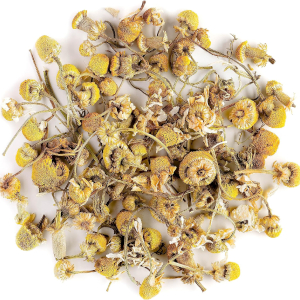
Of all the substances looked at closely – which emerged as commonly consumed products with an emerging evidence base – the team found that only a few merited further actual research: chamomile (see phtto, top of page), lavender, lemon balm, and echium.
My take
I was interested to discover that this study of OTC anti-depressants was just one of a series – which will eventually include parallel, similar investigations of products for anxiety and insomnia.
Perhaps the best news – as the researchers themselves pointed out – was that the OTCs they found most effective against depression- as the Hypocratic Oath famously says, ‘First, caused no harm.”
Now you can literally be happier and feel safer that you are what you eat…
~ Maggie J.