
California has mandated that some 50+ ‘Best Before’ label wordings be ditched in favour of just two. The hope is, consumers will now better understand what freshness labelling means. And waste less food and less money in the process…
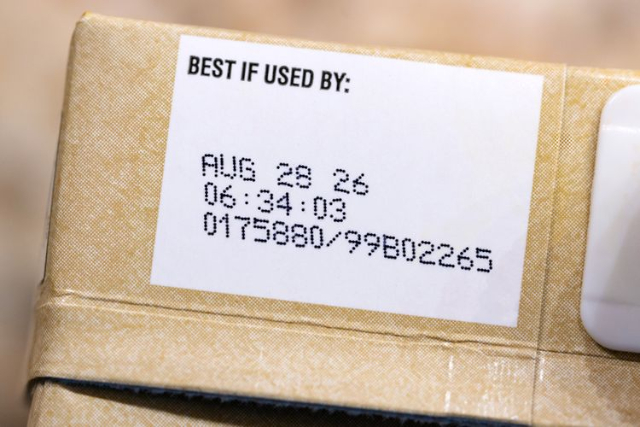
The new labels, which came into effect this past week, say ‘Best if used by:’ followed by a clearly legible date. Food packagers can also use a simpler ‘Use by:’ version. But that’s it.
Cutting the confusion
No more ‘Best Before:’ labels. No ‘Display until:’ stickers. Nothing that might confuse shoppers about how fresh the food they’re looking at may be. Use it by the deadline or don’t. It’s up to you. ‘Expiry Date’ labels will still appear – but only on infant formula and eggs.
The idea is to reduce the confusion among shoppers as to what the previous plethora of freshness labels meant. Recent surveys found that – in spite of years of attempts by government agencies to clarify the labelling situation – a majority of consumers still didn’t know what existing labels meant. And were, therefore unsure about how fresh the food they were buying was.
‘An abundance of caution’
More to the point, ‘out of an abundance of caution’, they were throwing out any foods they had on hand which they feared might be spoiled.
Californians Against Waste (CAW) estimates the average American spends more than $1,300 a year on food that goes uneaten, often because confusing labels lead people to discard edible food. That’s a total of more than 6 million tons of wasted food per year in Califo0rnia alone.
“Food is the single most common material land-filled in California, and decomposing food and other organic waste in landfills accounts for 41 percent of the state’s point-source methane emissions,” CAW shared in a statement about the new law. “Methane [from decomposing food in landfills] is a potent greenhouse gas responsible for about 30 percent of the global warming that is now driving climate change.”
My take
CAW sees the food waste picture from a global perspective: “Food systems inherently depend on natural resources, such as water, land, minerals, and fuel,” the statement relates. “As such, food systems directly impact our environment, and wasted food is fundamentally a squandering of the natural resources used to grow, process, distribute, and store our food.”
I agree wholeheartedly. And I’ve been trying my best to shop wisely so as not to waste any of the food I buy. But I’m still only performing at about a 75 – 80 percent level on that task. It’s harder than you might think to be ‘perfect’ and waste nothing!
My questions to you:
-
- Do you plan your meals ahead and buy only what’s on your list?
Or…
-
- Do you roam the supermarket aisles, picking up items that catch your fancy but may not have a place in your meal plan?
- Do you get sucked in by deceptive ‘Buy 3 – Get one FREE’ type offers?
What do you do to help avoid fresh food waste?
-
- Do you choose single fruit and vegetable items, rather than big bags, limiting your purchases to only the number of, say, apples you’re planning on eating?
If you opt for packaged produce…
-
- Do you choose smaller packages to ensure it will all be used up before the ‘Best if used before:’ date?
Muse on that!
~ Maggie J.