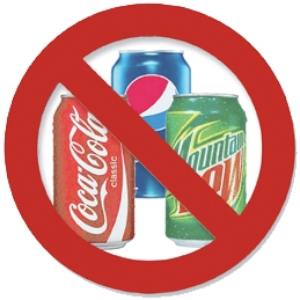
US readers will be familiar with the term ‘SNAP’. The Supplemental Nutrition Assistance Program is intended to help lower income folks afford better food. New data suggests the ban on using SNAP credits to buy junk food is working…
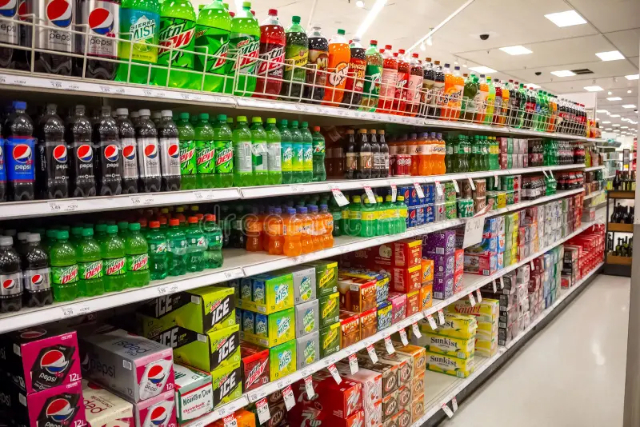 Many SNAP recipients aren’t vising the SODA aisle any more…
A statistical analysis by Stanford University and MIT reveals some interesting – and unexpected – findings about junk food consumption by folks who are having trouble affording food…
Bucking expectations
The results of the statistical analysis show low-income Americans receiving SNAP benefits did not – in spite of economists’ predictions – compensate for the ban on using the funds to buy soda by buying fizzy drinks with their own money.
Instead, soda sales across the US declined by more than 12 percent, indicating SNAP families switched to non-excluded beverages.
“We estimate that restrictions in the first 10 states reduced the average SNAP household’s retail purchases of excluded drinks by 12.4 percent over the first half of 2026,” An abstract of the analysis report states. “In states that excluded only some sugary drinks, SNAP households partially substi-tuted to non-excluded drinks.”
Why ban soda?
As faithful readers of the FFB wil know, junk food in general, and fizzy drinks in particular, cause widespread health issues in Western society. The thrust of the Standford/MIT study was to deter-mine what kind and how much of an impact the SNAP soda ban would have on public health.
They combined their estimated consumption reductions with external parameters to model welfare effects as reflected in public health care spending. “In our model, excluding all sugary drinks from SNAP nationwide would provide benefits of about $1.1 billion per year, of which about 70 percent is from reduced health care costs,” the researchers conclude.
‘Oh, Ye of little faith…’
The report will come as a shock to government officials and economists who predicted the SNAP soda ban would not impact product sales or public health costs significantly.
Even back in 2017, well before the upheaval of the COVID era and the post pandemic food price crisis, economists were talking about banning the use of SNAP benefits for junk food purchases.
In an article for the Brookings Institution, Diane Schanzenbach wrote: “What is the likely impact of banning soda purchase with SNAP dollars, then? Consumers would change the payment method used for buying soda, but likely will not change the amount of soda they buy.”
Just last year, US Health and Human Services (HHS) Secretary Robert F. Kennedy Jr. proclaimed: “We shouldn’t be subsidizing people to eat poison.”
Relax, Mr. Secretary. You’re not…
My take
If nothing else had been produced by the Standford/MIT study, the finding that the experts were wrong about the effects of banning soda purchases using SNAP funds is hugely revealing…
First, it suggests that scholars and government officials alike harbour an unrealistic, pessimistic view about the mind set and behaviour of the lowest folks on the US economic totem pole. But that con-forms perfectly to the historic view of those who are financially better off, that those less fortunate are more prone to try to ‘fiddle the system’ out of desperation.
Instead, the study suggests that the majority of folks relying on social supports are just as ‘honest’ as the rest of us.
I’d like to see Secretary Kennedy publicly admit that his inflammatory statement about ‘subsidizing people to eat poison’ was off base. And declare that the working poor deserve more respect than the average person – or official – is apt to accord them…
~ Maggie J.