
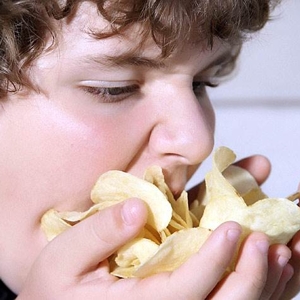
Trust the Japanese – historically the world’s most elegant, exotic eaters – to come up with a simple, dignified way to fight obesity. And to refine the concept down to the most minute details. The new approach requires no equipment, meds or special foods – just you…

The Japanese have always impressed me with the way they think. Almost always outside the Western ‘box’, and placing a high priority on simplicity, elegance and dignity…
Preventing obesity no exception
We’re used to seeing standard lab-centred experiments and studies, focusing on chemistry-based theories, leading to medication-based ‘solutions’, when it comes to ‘nutrition issues.
But the Japanese have always thought differently. Once again, their approach has resulted in what may be the simplest – and possibly the most effective – suggestion yet proposed to fight one of society’s greatest collective crises – obesity.
Less is more…
My late Dad, always a practical guy, had a story he loved to tell about thinking differently. Specifically, how it solved a big problem for early assembly line designers.
It’s said Henry Ford, tooling up for his Model A, the first assembly-line mass-produced ‘product’, had a sticking point on the line. And nobody seemed able to solve the problem. The engineers came up with some suggestions. But all proved either too expensive, complicated or unreliable to please Ford. Only after turning the issue on its head and bringing in a time-and-motion specialist did the ultimate solution reveal itself.
After studying the situation for a very short period time, the new fellow told Ford. “Just replace the right-handed worker at this station with a left-handed one, and move his task to the other side of the line.”
That simple adjustment eliminated the jam on the line, saving Ford loads of time, money and frus-tration, while improving the quality of the work and increasing employee job satisfaction. Implementation cost? Zero. Zilch. Not one red cent.
The story may be apocryphal. But the moral is universal. To get the best answer, you have ask the best question.
Switch in focus
The troubleshooters in Japan, in their typical broad-minded, far-seeing approach to analysing pro-blems, looked right past the labs, the equations and the chemistry. And saw immediately what they were seeking: A human-based solution to a human problem.
What they thought…
A team led by Professor Katsumi Iizuka from Fujita Health University (FHU), Japan, conducted a study to identify factors that influence meal duration and eating behavior.
Specifically, the team explored factors including sex differences, chewing patterns, and external rhythmic stimuli, and their relationship to how we consume our meals. Not, necessarily what or how much we eat.
“While nutritional science is often concerned with food metabolism and absorption and dietary con-tent, there’s limited evidence in Japan on dietary behavior that connects the two. This intrigued me to study eating behavior,” explains Iizuka.
What they did
A group of 33 healthy participants aged 20 to 65 years who were asked to eat slices of pizza under different conditions.
Researchers measured meal duration, number of chews, number of bites, and chewing tempo (the rate or speed of chewing), noting how these variables changed when participants were exposed to different metronome rhythms using headphones.
What they found
The results revealed significant differences between men and women in eating behaviors. Women typically took longer to eat, averaging 87 seconds compared to 63 seconds for men. They also chewed more times (averages of 107 vs. 80) and took more bites (4.5 vs. 2.1 to consume equal-sized portions of pizza.
However, the actual chewing tempo was similar between both sexes.
The team was already aware of previous studies that found a positive association between slower eating and the risk of obesity. And its new study revealed that, when participants were exposed to a slow metronome rhythm of about 40 beats per minute, their meal duration increased significantly compared to eating without rhythmic stimulation.
The takeaway
The study suggests several straightforward strategies to extend meal duration: increasing the number of chews per bite, taking smaller bites (which naturally increases the total number of bites per meal), and potentially creating a slower eating environment through calming music or rhythmic cues.
“These are easy, money-saving measures that can be started right away to help prevent obesity,” says Iizuka.
My take
I’ve been criticised my whole life for ‘eating too fast’. But the reasons – as explained by my Mom and Dad – were not associated with the risk of obesity.
“You’re noisy. You make ugly faces. You eat with your mouth open. You hunch over your food like a hungry hyena who’s afraid his brother is going to steal his meal,” they would say.
But the ultimate complaint was: “Its just not lady-like. Nobody will ever invite you anywhere to eat more than once!”
In the end, they were right. I made a concerted effort to change my ways. Though I still catch myself occasionally gobbling, slurping and even snorting over my food, those occasions are rare. And I’ve learned not to ‘let myself go’ in the company of company, or in public places.
Since then, I’ve always been conscious that, the slower I eat, the less I eat, and the more I enjoy it. But I’ve never associated eating slower with controlling my weight. Until now…
~ Maggie J.