
You may well have heard of Akee and Salt Fish – especially if you’ve hung out with Jamaican folks at all. It’s Jamaica’s national Dish, and it’s a breakfast staple. It has just two main ingredients, as the name suggests. But there’s a ‘trick’ to both of them!
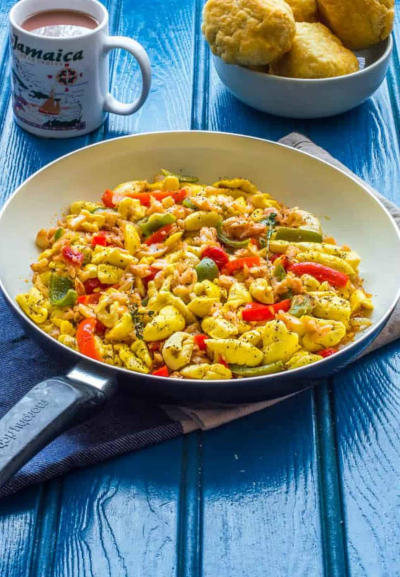
This is a dish you can have fun with. The traditional recipe our contributor work-ed from calls for tomatoes. But they have to be perfectly ripe, in the ‘full bloom’ of their flavour, but not too soft. Other recipes I’ve seen call for red and/or green bell peppers, instead. The truth is, you can add just about any spatula-resistent veggie you want to this dish!
Akee needs love…
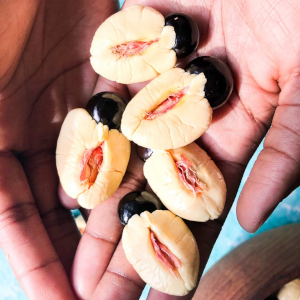
Akee is the fruit of its namesake tree (see photo, top of page), which is native to West Africa. It came to North America via the Caribbean, with African slaves in the 18th and early 19th Centuries. Akee’s cousins in the Soapberry family include the lychee and the longan. To prep it, you have to cut open the tough-skinned fruit separating its 3 lobes. Each lobe contains a yellow lump which en-cases a hard, black seed. All you want is the yellow material surrounding the seed.
You have to cook the Akee well to avoid the toxin it naturally contains. Cooking heat breaks it down safely. The rule is: boil, simmer or sauté it until it’s fork tender, but not mushy. There’s a fine line between those two states of matter with akee, so don’t leave it unattended on the stove.
Salt Fish needs soaking…
… Or boiling, depending on who you ask. You can soak it overnight in cold water or milk to help draw the salt out of it, and make it tender and flaky again. Or you can boil it for a lesser length of time, tasting a flake or two at regular intervals to determine when enough of the salt has been removed. You need to leave some in, or the fish will be tasteless and mushy.
When you’ve finished soaking the salt fish, flake it and remove any bones you encounter.
‘Salt fish’ can refer to any ocean fish that’s been preserved by salting and drying. But in Jamaica, the name is synonymous with salt Cod.
Making the dish
Start by cooking the onions in oil in a large pot or high-walled skillet. A minute or two will do. Then add the garlic and let cook for another minute or so. Next, add the scallions, and hot peppers (if you are using them). Finely chopped Scotch Bonnet peppers are the authentic heat source for this dish. But they’re fiery hot, and most non-Jamaicans find them too hot… Feel free to cut back the amount specified in the recipe – or leave them out altogether, if you wish.
Add the salt fish and, finally, the akee at further 2-3 minute intervals, and let simmer about 5 minutes more.
Non is the time to taste for seasonings and heat, and adjust as necessary. It’s also the time to add a little water if the mixture is too dry.
Serve with…
… Whatever sides you wish. White rice, baked plantains, fresh avocado and fried Jamaican dumplings are just a few suggestions…
My take
I’ve seen a number of recipe website photos of akee and salt fish showing green peas and other ad-ditions that may not have been original to the recipe 200 years ago, but are now part of the tradition.
If you don’t fancy fiddling with the fresh, ‘on-the-hoof’ akee fruit, you can get it pre-prepped, canned or jarred, in some ‘better’ supermarkets (in the Asian or International aisle), or any Asian or Carib-bean grocery.
Like I said at the outset of this odyssey, have fun with this dish and make it your own!
~ Maggie J.