
British military families posted in India during the Raj and the Victorian era brought back many Asian dining customs, foods and recipes when they returned home. Some have survived up to the present. And one of the most beloved and enduring is Mulligatawny Soup…
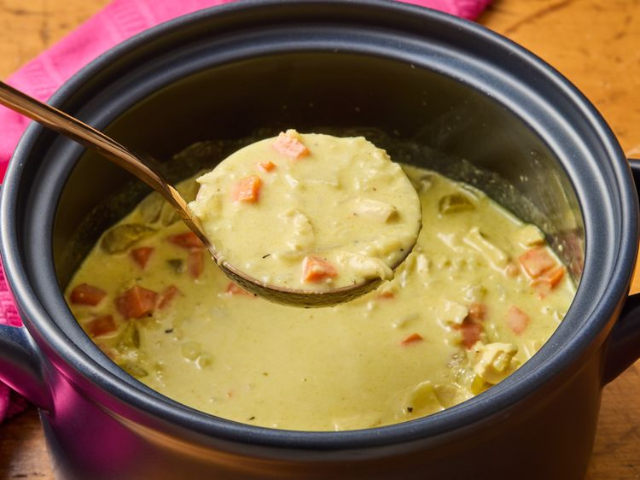
‘Mulligatawny’ is a corruption of the original Tamil words miḷagu (‘black pepper’), and thanneer (‘water’) – literally, ‘pepper-water’, Wikipedia tells us…
Peppery, but not watery!
But while this hearty soup IS peppery, with traditional curry, it’s far from watery! Mulligatawny is traditionally a thick, creamy delight thanks to coconut cream and rice starch thickenings…
According to The Oxford Companion to Food, “the simplest version of the soup included chicken or mutton, fried onion, and spices. More complex versions may call for “a score of ingredients”. Versions originating in southern India commonly called for lentils.”
Basics in common…
All the myriad versions of Mulligatawny made in all regions of India have some ingredients in com-mon. One is chicken – unless you want a vegetarian or vegan soup, which is completely in accordance with the heritage of the dish.
Today’s version follows the traditional French cuisine method of starting off a soup with Mirepoix – equal parts of chopped onions, carrots and celery. They give the dish a solid, earthy flavour base.
Apple is traditional in Mulligatawny, as is rice (or sweet potatoes) to help thicken the soup, as a sweet foil for the curry.
Use prepared yellow curry to keep the dish authentic, both in colour and flavour. And use as much or as little as you like, to control the heat. If you use a really small amount of the curry powder, you may want to add yellow turmeric to boost the colour.
Tips and hacks…
You can go really exotic and use coconut cream instead of regular cream. It will thicken the soup beautifully, and get thicker the longer you simmer it. And coconut cream adds a ‘je ne sais quoi‘ flavour influence that mates and mingles in unique ways with the curry. Remember, when adding your curry powder, that the coconut cream will cut the heat somewhat. You’ll get it perfect for your palate after two or three batches…
Cooking that small amount of flour with the Mirepoix is a failsafe to ensue the soup thickens. You may or may not need it if you use coconut cream instead of regular cream, especially if you add more coconut cream than called for (as I do!). Remember, there’s also a small amount of rice in this dish, which will liberate starch for thickening during simmering.
You can use sweet potato in place of the rice. It, too, will liberate starch for thickening and may also contribute to the rich colour of the dish.
My take
Making this soup is really no different than making any other of its kind. Just refer to the recipe the first few times, and from there, you’ll be able to make ‘your’ version from memory.
Though you aren’t supposed to use actual chicken in the soup – just chicken broth – you can, espe-cially of you’re making your own broth from, say, the carcass of a Rotisserie Chicken.
But if you want an authentic veggie version of Muligatawny, use boxed vegetable stock from the store and avoid animal protein all together. And use vegetable oil rather than butter and definitely opt for coconut cream…
~ Maggie J.