
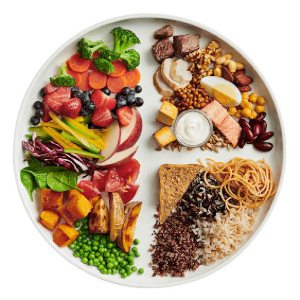
I guess we all knew, on some level… But a new poll has discovered food and dining are sources of ‘couples discord’. The trouble often centres on the eternal, vexing question of, “What’s for dinner?”
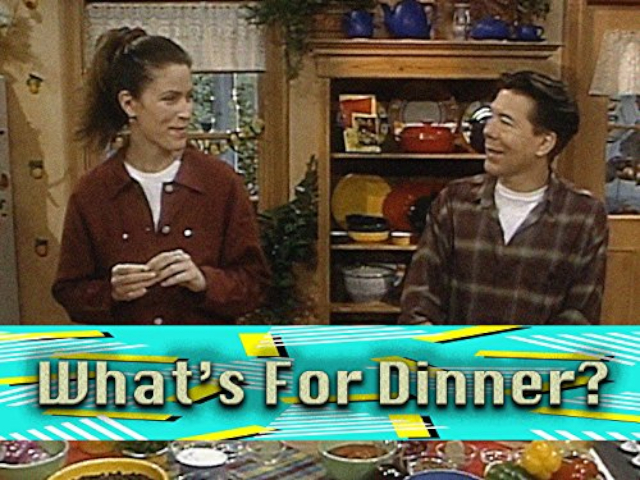 Ken Kostic and Mary Jo Eustace: Co-hosts of the hit Food Network series
What’s for Dinner? (1994-1999). They got along well, probably
because they were NOT in an amorous relationship-…
You both work. You both commute. You both arrive home at night emotionally and physically washed out. That’s probably the worst time to raise the inevitable question, “What’s for dinner?”. But that’s usu-ally when it ‘happens’…
Discord inevitable?
Under that scenario, spousal discord is almost unavoidable, Especially if one member of the couple – or both – has had a particularly hard day.
New research from HelloFresh, conducted by the Harris Poll organization this past April, reveals that one quarter (25 percent) of couples describe debates over dinner as an underlying source of relation-ship tension. And more than half of couples aged 18 to 34 (55 percent) say their relationship would improve substantially if they did not have to decide what to eat for a week, making it clear ‘what’s for dinner’ is about much more than food.
“Dinner is supposed to be the part of the day when couples reconnect, but for many Canadians, it’s become the spark for another nightly standoff,” The HelloFresh report begins. ” After long workdays and decision fatigue, even figuring out what to eat can spiral into endless scrolling, passive-aggres-sive ‘I don’t care, you pick’ exchanges, and unnecessary tension at the exact moment couples are trying to unwind.”
Deal effectively with the ‘small stuff’
“In my line of work, I’ve learned that relationships rarely fall apart over one big moment. Usually, it’s the small, repeated frustrations that quietly build over time,” says Toronto Divorce Lawyer Justin J. Lee. “Who’s cooking, who’s deciding what to eat, who’s carrying the mental load at the end of an exhausting day.”
“When couples remove some of that everyday friction and make things feel more shared and man-ageable, they tend to communicate better and enjoy each other more,” he points out. “I always tell couples: don’t wait for a crisis to fix the small things. Making minor adjustments to lighten the daily load is the best way to intercept resentment before it’s too late.”
No respecter of age…
The nightly tension over supper plans is no respecter of age or generations. The study findings sug-gest the issue spans generations of couples, from those newly living together to long-term partners navigating busy schedules and endless daily decisions. More than half of couples aged 18–34 (54 percent) and nearly one third of couples aged 35–54 say meal-related disagreements can spoil the mood.
What to do?
One way to avoid suppertime debates is to sit down on the weekend and plan your meal choices for the coming week. This also gives you an advantage when you go shopping fo0r groceries, in that you will have a set list and can about being roped into manager’s specials on things you only ‘might’ use. And multi-purchases of products you can’t use before they go bad.
Planning ahead can help especially when one member of a couple is a vegan or vegetarian and the other is a conventional omnivore. The more complex your dinner decisions, the more important a comprehensive shopping list becomes to supper success.
My take
The old 90s maxim states: “Don’t sweat the small stuff.” In this case, it’s the small stuff that should be attended to, before it becomes ‘big stuff’.
You’ll still disagree over which bottle of wine to open, and what to stream on NETFLIX later in the evening. But dinner will be a fret-free done deal!
~ Maggie J.