
You don’t hear much about the business side of the Food Business, per se. But occasionally a big story comes along, which portends big consequences for the consumers. So it is with today’s news that Tyson is closing packing plants due to cattle shortages…
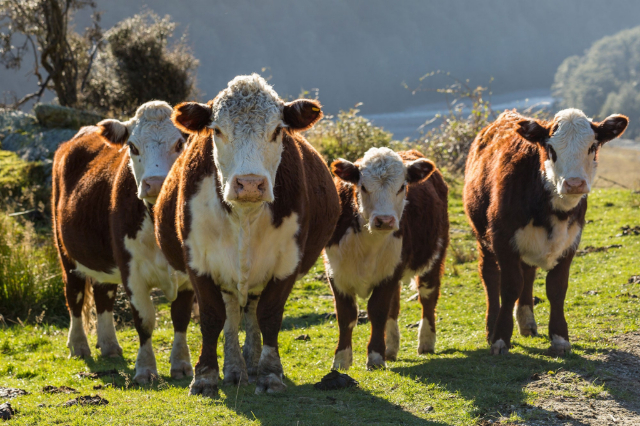 Beef cattle are in short supply as ranchers reduce herd
sizes in the face of decreasing demand…
You probably think of Tyson as a chicken brand. But the mega-processing and packing company also handles a large slice of US beef production. Now, Tyson is selling or closing three facilities and laying off at least 2,500 workers as the company struggles to overcome heavy losses…
Losses?
It should be no surprise, to those of us who’ve cut back our beef purchases or stopped buying it al-together, that beef producers and packers are facing tough times.; Demand has shrunken during the past few years of sky-high beef pries, and rangers have had to make tough decisions in he face of several years of droughts and other weather issues. Not to mention the soaring price of feed, fuel and other cattle-raising business realities…
As a result, meat packers are suffering a shortage of ‘raw material’. Tyson has not only announced closure of three beef plants. It will also put on a second shift at its Amarillo, Texas, plant after al-ready consolidating some production at that facility, and laying off 1,760 workers late last year.
Now what happens?
Aside from Tyson earnings taking a beating, along with shareholders’ dividends, the net result for consumers will be even higher beef prices. It’s the old law of supply and demand. When supply falls, prices rise.
Tyson is one of the biggest meat packers in the US. But there are many others. And they’re all fighting over the reduced stock of cattle available.
-
- Higher beef prices at the supermarket in the middle of BBQ season.
- Decreased selection of beef cuts at the supermarket.
- Higher prices at Fast Food outlets which feature beef products.
- A general move by consumers even further away from beef.
- Increased market demand for chicken and pork
And…
-
- Maybe, an uptick in the recent move away from meat altogether, and toward vegetable protein sources.
Tariffs also a factor
US President Donald Trump’s continuing – soon to be increased – import tariffs on Canadian and Mexican beef are also pressing down hard on US packers. Trump recently announced steps to ease trade restrictons with his southern neighbour, but talks remain stalled with Canada. And it appears, from reports close to the talks, that the situation is in a stalemate.
And Tyson CEO Donnie King said, in a recent earnings call, an increase in imports from Mexico,“will not solve the entire gap of beef losses we are currently seeing.”
My take
The beef industry is being hit on all sides with economic, political and environmental cannonades. It will survive – but in what form?
I predicted almost a decade ago, that by the middle of 2020s, the beef industry would be facing a major revolution: downsizing dramatically, shifting its production and marketing directions toward the demands and desires of a high-end clientele who can afford what look to be permanently higher prices. ‘Sell the exclusivity’ would be the new philosophy.
And this could be the pivot point toward that massive industry make-over…
~Maggie J.