
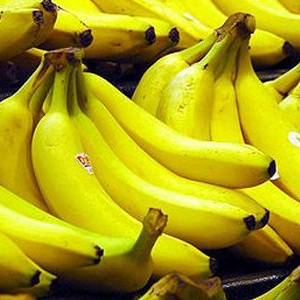
Scientists have been trying to develop a new variety of the classic, familiar-looking yellow banana that can stand up to the fungal disease threatening to wipe out the ubiquitous Cavendish type we’re used to. Now, they’ve succeed – sooner than predicted…
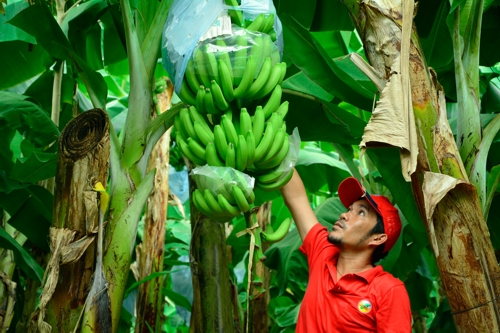
Chiquita – perhaps the most famous name in bananas – has succeeded in developing a new strain of tasty, bright yellow banana that can replace the old, standard Cavendish type planted by banana producers around the world. The problem is, not one but two fungal diseases have been beating down the Cavendish in its war for survival for almost a decade, now.
The first of these scourges is called Tropical Race 4, which specifically targets the Cavendish. It’s es-pecially rampant in the Caribbean and Central America, where a majority of the bananas destined for the North American Market are grown. It’s also partially resistant to the Black Sigatoka fungus, which is complicating the whole banana disease picture.
Enter, Yelloway One!
That’s the hybrid cross Chiquita has come up with following an intense cross-breeding program in-volving a host of banana varieties from around the world. And it’s the first viable candidate they’ve found to replace the Cavendish.
The next step is to plant a few stands of them to see how they fare ‘in the real world’. And gauge their viability as a large-scale replacement variety.
Chiquita says its Yelloway Initiative, launched in 2020, is designed to, “develop banana varieties that are resistant to the diseases endangering the world’s banana supply while maintaining the familiar look, feel, and shelf life of the beloved Cavendish banana.”
“Yelloway One is the first of its kind,” the company’s official statement says, “ushering in a new era of banana cultivation.”
At least, they sincerely hope so.
‘Not (yet) ready for prime time’
The Chiquita scientists have had to master a number of challenges in their crash breeding program. But, “[e]ach obstacle we overcame represented a significant milestone,” Dr. Fernando García-Bastidas, leader of the research group.
“From the initial greenhouse trials in the Netherlands to the creation of Yelloway One, we have prov-en that our approach works, and we are excited to continue delivering innovative banana varieties in the years to come.”
The first generation of mature plants is reported, “approaching flowering and fruit-bearing stages in greenhouse environments and will soon undergo field trials in the Philippines and Indonesia.”
The company notes, it will take several more years to propagate enough new trees to replace the tracts lost to the fungal invasion. And a few more after that before the new trees mature to the point where they start flowing and producing fruit.
My take
With a little (more) luck, the world will be saved from an all-out banana crop failure before the new disease-resistant banana variety starts to produce.
Meanwhile, Chiquita is all too aware that maintaining the world’s love affair with the banana de-pends heavily on delivering a replacement with ‘the same familiar look, feel, and shelf life’ as its predecessor.
We should all recognise Chiquia for the care it’s taking to not only come up with a scientifically viable replacement banana, but one that also passes the consumer acceptability test… Which is almost as important to the overall success of the Yelloway One Inititative!
~ Maggie J.