
Women never used to be mentioned in the same breath as ‘heart disease’. It was over-whelmingly men who suffered heart attacks and strokes. But in the new Millennium it seems women are catching up with men, in terms of cardio risk…
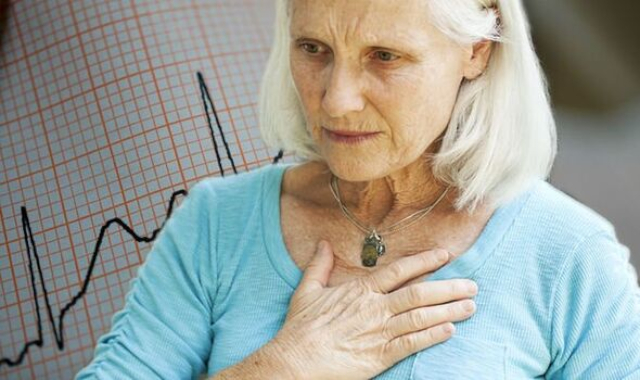
Heart disease is tightening its grip on American women. American Heart Association warns that, over the next 25 years, cardiovascular disease will rise sharply, driven largely by a surge in high blood pressure, diabetes, and obesity. By 2050, nearly 60 percent of women in the US could have high blood pressure. And close to one in three women aged 22 to 44 may already be living with some form of heart disease…
A gloomy outlook
That’s a pretty gloomy outlook, to say the least. But it constitutes the main finding of a new survey based on analysis of disease case reports.
The new scientific statement published in Circulation, the peer reviewed flagship journal of the American Heart Association (AHA), projects that nearly 6 in 10 women in the United States will be living with some form of cardiovascular disease (CVD) within the next 25 years
Maybe your grandmother…
“One in every three women will die from cardiovascular disease – maybe it’s your grandmother, or your mother or your daughter,” says Karen E. Joynt Maddox, MD, MPH, FAHA, and chair of the volun-teer AHA writing group.
“Additionally, more than 62 million women in the U.S. are [currently] living with some type of cardio-vascular disease and that comes with a price tag of at least $200 billion, annually. Our estimates in-dicate that, if we stay on the current path, these numbers will grow substantially over the next 25 to 30 years.”
Why is this happening?
Diet and nutrition have been cited as a key contributor to the surge in female cardiovascular diseas-es. And it’s no wonder. Poor eating habits have driven an obesity crisis. Which, in tun, has triggered a general upsurge in type 2 diabetes and CVD. And at the root of these crises, the overwhelming pre-sence of Ultra-Processed Foods (UPFs) on our supermarket shelves has driven the trend to unhealthy eating and poor food choices.
Even more alarming, signs that point to CVD and associated conditions in later life are now showing up in children and teens. “By 2050, nearly 32 percent of girls aged 2 to 19 are projected to have obes-ity, an increase of more than 12 percent,” the report warns.
How to fight back
The AHA defines ideal heart health through its Life’s Essential 8 – four health behaviours (eat better, be more active, quit tobacco and get healthy sleep) and four health factors (manage weight, control cholesterol, manage blood sugar and manage blood pressure).
But more and more people of all walks and all ages are failing in not one or two, but several of those key areas.
“The majority – as much as 80 percent – of heart disease and stroke can be prevented,” noted Stacey E. Rosen, MD, FAHA, volunteer President of the American Heart Association, and executive director of the Katz Institute for Women’s Health.
“I like to call Life’s Essential 8 a prescription for health. And one of the most exciting things about it is that we have tailored guidance for these metrics for differ-ent times in a woman’s life – from child-hood through menopause and beyond. This report projects a concerning future, however, it’s not too late to take the first steps to healthier outcomes.”
My take
Rosen hits the nail on the head with her observation that ‘it’s never too late’ to start taking care of ourselves – not only our cardio health, but all aspects of our well being.
Paying attention to the ‘Essential 8s’ is a good way to start a new awareness of your personal CVD situation. And practicing more-circumspect eating habits is closely intertwined with that goal…
~ Maggie J.