

Times change, and we change with the times – whether we want to or not. Whether we realize it or not. And the times, they are a changin’ faster than ever these days. So it’s no surprise that last year’s protein craze is already giving way to ‘fibre fancy’…
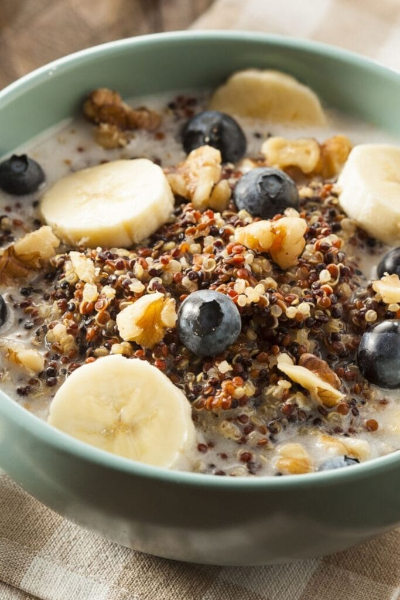
Behold, at left, a classic (maybe, actu-ally, newstalgized!) fibre-rich breakfast. And it’s currently ‘all the rage’. Last year, processed food manufacturers – junk food purveyors, in particular – concent-rated on pumping their products full of added protein. Even beverages. And promoted the living daylights out of their brands as ‘healthier’. That got the consuming public on their bandwagon – for a while.
But when the UPF pushers ran out of ways to pump protein, they started looking for a new nail to hang their hat on. And the obvious candidate was fiber. Dietary fibre was already being touted as a healthy additive in many products, including breads, cereals and ‘energy foods’ such as granola bars. It was just a matter of extending the concept…
But while protein was already a ‘catch word’, screaming ‘healthy’ to consumers, fibre will need some selling…
The dark side of ‘healthy’
Protein, naturally, is associated with what goes into our bodies, and functions such as muscle build-ing and other outward signs of heartiness and vigor.
Alas… Fibre is commonly associated with what comes out of our bodies. You know what I mean. Many famous laxatives tout fibre as their active ingredient. So how does Big UPF make fibre stalwart, noble – even ‘sexy’?
That remains to be seen. But science has provided the UPF mongers with new ammunition in their war over consumers’ hearts and minds. Fibre has recently been declared valuable to other body functions than the obvious. Particularly: gut health, lowering cholesterol and regulating blood sugar.
So it seems the corporate fibre advocates have everything they need to launch a ‘heathy’ onslaught on the masses.
But there’s more…
One factor that put a damper of sorts on the protein craze, as folks delved deeper into it, is that doctors agree most of us already get at least enough of it in our daily diets – no matter how skewed toward junk food they may be. More is overkill. And there comes a point where added protein doesn’t really do us any good.
Fibre, however, is another thing altogether. Most of us don’t get enough, even if we ARE eschewing junk food and embracing fresh fruits and veggies. So Big UPF may have a tiger by the tail on this one.
Not so easy
However… It emerges quickly, when you try to add fibre to foods, that it’s not as easy as you might have thought. Especially if you’re thinking of fibre-izing beverages. Anyone who’s used Metamucil or it’s ilk knows that high-fibre liquids are often thick and sticky. Healthline tells us that, “soluble fiber dissolves in water and forms a gel-like substance.” Put that in soda or Gatorade, and you might as well dye it fluorescent green and market it specifically to Ghost Busters fans!
Some differentiation required
There are actually two kinds of dietary fibre. There’s the soluble stuff, which is beneficial on so many ways, but there is also insoluble fibre, also called mechanical fibre. My parents’ generation called it ‘roughage’. The latter is commonly found in the structural components of grains, fruits and vege-tables. It can also help with lower digestive upsets, but it doesn’t provide any of the other plusses that soluble fibre does.
The probem is, some UPF makers who already add fibre to their products don’t seen to know the dif-ference between the two kinds. And, since insoluble (mechanical) fibre is much cheaper and easier to add to existing fibre-enriched products such as cereals, that’s the kind that tends to be used. So… you may well ask, how much good does extra roughage do you?
The moral to the story is, you’ll have to dig down into the ingredients list and find out how much of which kind of fibre your ‘boosted’ product contains.
My take
Having digested the foregoing, I think it’s fair to assume you are tuned-in to my ‘Yes, but’ stance on adding fibre to UPFs.
But I’m still more concerned with the UPF industry’s staunch refusal to remove ‘bad’ stuff from their products, while at the same time, adding ‘good’ ones. This approach may make junk food more healthy in some ways, but leaves it no less bad in the same old ways…
~ Maggie J.