
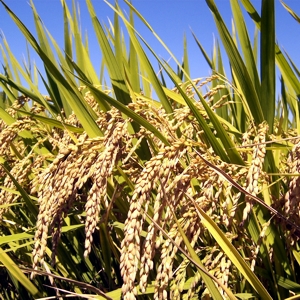
… And they found there’s still a troubling amount of the poison in the food system. In fact, research-ers found arsenic in every Rice sample they tested. And they say the situation is worse than the last time they tested. But there’s no reason to panic…
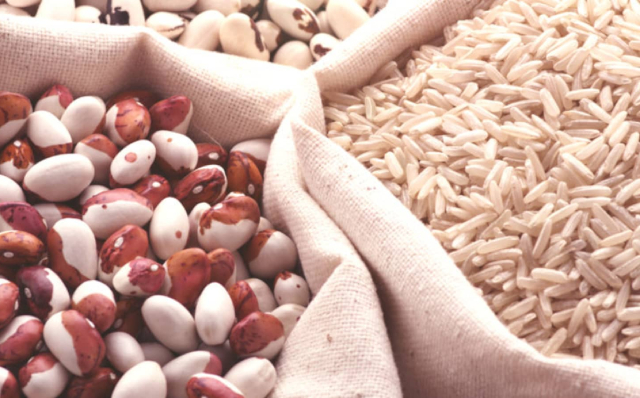 Rice + Beans – or lentils or other legumes – is the almost magical combo
that provides more than half of the world’s population with
a complete plant-based nutritive protein complex…
“CR first tested rice for arsenic in 2012, and released follow-up testing in 2014,” the organization recaps. “We recently conducted new tests to see if levels of inorganic arsenic, the more dangerous form of the metal, declined. Yet, while manufacturers and regulators have long known about that issue, our results show the problem persists.”
Out of our control
And that’s the most troubling aspect of CR’s latest findings. Most of the rice sold in Canada and the US is imported from Asia. And Asian growers don’t operate under the same pesticide restraints that domestic growers must abide by.
Arsenic is the traditional insecticide Asian growers use. It’s cheap and available there, unlike in North America where its once-universal use in insect and rodent protection for crops was sharply curtailed once it was discovered the stuff got into the food it was supposed to be protecting. And didn’t break down readily in the soil to which it was applied. Which meant it was still there for the next crop to absorb.
What they did
For the latest round of tests, CR analyzed total and inorganic arsenic levels in two to three samples each of 52 different rice products: arborio, basmati, brown, jasmine, sushi, white, and precooked microwavable types, as well as rice side dishes with seasoning. They also tested for cadmium, lead, and mercury.
CR found detectable levels of arsenic, cadmium, and mercury in all samples they tested.
CR has produced a chart showing the test results for brands of white and brown rice, and rice pro-ducts they tested. The chart contains recommended safe consumption levels for each product, based on the actual amount of arsenic they found.
The real problem?
There are no federal arsenic limits for rice. But the FDA has set a limit (which the agency calls an action level) of 100 parts per billion (ppb) for inorganic arsenic in infant rice cereals. When these cereals exceed that level, the FDA may take various enforcement actions, including working with companies to recall products the agency deems unsafe.
Seventeen of the products CR tested averaged 100 ppb or more. “Given that there is no safe level of inorganic arsenic, CR believes the FDA should set limits for all rice products.”
Who’s most at risk?
Ana Navas-Acien, is a physician and epidemiologist who is the Leon Hess Professor and Chair of Environmental Health Sciences at Columbia University Mailman School of Public Health in New York.
Back in 2012, she analyzed Centers for Disease Control and Prevention data for CR’s first investigation into arsenic in rice. In that analysis, people who ate more rice expelled more arsenic in their urine, showing they were exposed to higher levels of the metal. Arsenic levels were 44 percent higher among those eating one serving of rice or rice products in a 24-hour period than they were among those who had no rice. Those who had two servings had levels 70 percent higher.
Nearly 40 percent of Americans consume rice at least once a week, according to a 2016 analysis from the Food and Drug Administration. Many people, including those in African, Caribbean, Asian, and Latino families, often eat rice more frequently, in some cases daily. Some Asian families eat rice three times a day.
My take
There’s no way to get the arsenic out of the rice without destroying the rice. And it appears there’s no way to get foreign rice producers to change their poisonous ways.
So it appears the best rice lovers can do is refer to the CR consumption safety table before planning any rice-based meal.
It’s a last-resort solution, at best. One step short of cutting rice out of your diet altogether….
~ Maggie J.