
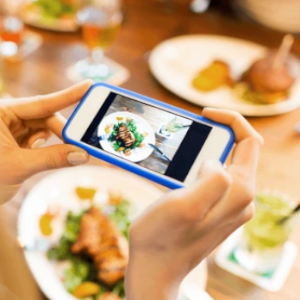
It sounds like something out of a made-for-streaming Sci-Fi ‘limited series’ about a dark convergence of the diet industry and rogue machine intelligence. But smart-phone photo diet analysis is real, and it’s almost ready to roll out!
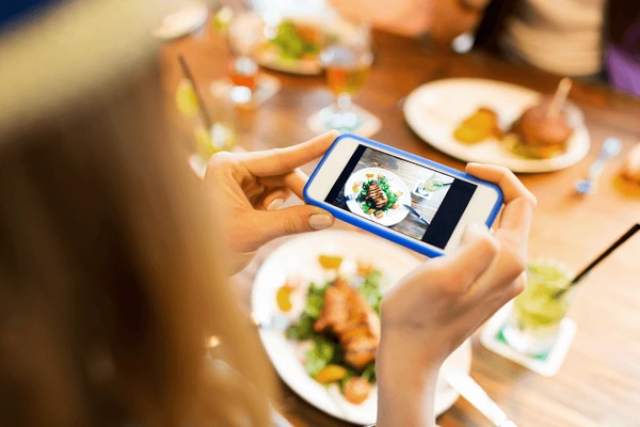
The technology, “uses advanced deep-learning algorithms to recognize food items in images and calculate their nutritional content, including calories, protein, carbohydrates and fat,” according to an abstract of the report’s results.
“Traditional methods of tracking food intake rely heavily on self-reporting, which is notoriously un-reliable,” said study report co-author Dr Prabodh Panindre, Associate Research Professor of NYU’s Tandon School of Engineering’s Department of Mechanical Engineering. “Our system removes human error from the equation.”
How it works
Previous attempts struggled with three fundamental tech challenges that the NYU Tandon team ap-pears to have overcome.
“The sheer visual diversity of food is staggering,” said the study reports other co-author, Dr Sunil Kumar, Professor of Mechanical Engineering at NYU Abu Dhabi. “Unlike manufactured objects with standardized appearances, the same dish can look dramatically different based on who prepared it. A burger from one restaurant bears little resemblance to one from another place, and homemade ver-sions add another layer of complexity.”
The NYU team’s second major advance is their volumetric computation function, which uses advan-ced image processing to measure the exact area each food occupies on a plate.
Third, the team overcame a dire shortfall in mobile computing power, which prevented smart phones from real-time operation by complex software such as nutritional analysis apps. The solution there was simple: have the phone take the photo, send it to a central facility, and have a powerful server-based app perform the analysis.
Tested on ‘a world of foods’
When tested on a pizza slice, the system calculated 317 calories, 10 grams of protein, 40 grams of carbohydrates, and 13 grams of fat – nutritional values that closely matched reference standards.
It performed similarly well when analyzing more complex dishes such as idli sambhar – a South Indian specialty featuring steamed rice cakes with lentil stew – for which it calculated 221 calories, 7 grams of protein, 46 grams of carbohydrates and just 1 gram of fat. Again, within expectations, based on reference standards.
“One of our goals was to ensure the system works across diverse cuisines and food presentations,” said Panindre. “We wanted it to be as accurate with a hot dog – 280 calories according to our system – as it is with baklava, a Middle Eastern pastry that our system identifies as having 310 calories and 18 grams of fat.”
My take
This technology has great potential in may applications associated with identifying individual dif-ference in diet and food choices… And the subsequent development of personalized treatment programs for diet-based ills. Health practitioners are intensely interested in such personalized systems… And are focusing a great deal of money, energy and other resources on developing it.
The ‘personalized approach’ is touted by many researchers and practitioners as ‘the way of the future’. And as such, is something of a Holy Gail no one involved with it thought might be anywhere near this close to discovery!
~ Maggie J.