

In culinary school I suggested to our Nutrition and Health instructor that Peanut Butter was pretty ‘nutrition-dense’. She boggled, and corrected me, observing that PB is mainly oil Peanut protein and Salt. So… What’s the most nutrition-dense food?
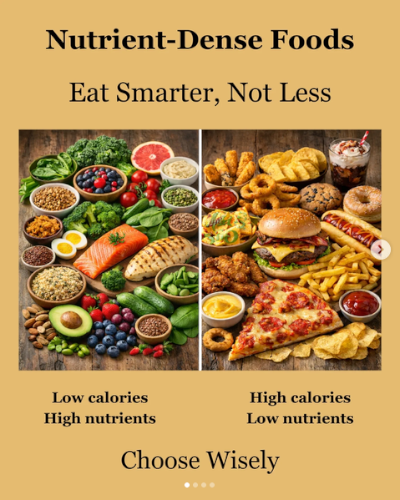
It turned out that ‘nutrition-dense’ doesn’t mean what I thought it did. Peanut butter has lots of protein and fat. But not much nutritional variety. And variety, as the old saying goes, is the spice of life!
A clinical definition…
According to a recent Good House-keeping report, “While many ingredients offer health benefits, some stand out for their impressive amounts of protein, fiber, antioxidants, vitamins, and miner-als, making them especially nutrient-dense choices.”
There are other definitions such as ‘nut-rition packed’… In fact, Peanut Butter – a high-protein food – can definitely quali-fy as ‘packed’. But, not as ‘dense’.
Key questions…
Gregory Lafortune, MS, RDN, the founder of Optimal Plan Nutrition, suggests we assess any food we’re considering adding to our diets based on 3 key questions:
-
- Is this a whole food? Whole foods that are not or only minimally processed are likely more nutrient-dense.
- Is this food versatile? The ability to pair foods in different ways helps increase the variety of foods and nutrients you take in.
- Is it lean and/or plant-based? Lean proteins and plant-based foods offer a ton of nutrient density and can be used in a variety of dishes.
The rundown…
Lafortune also offers a list of foods that are superbly nutrition-dense – some of which we commonly refer to as ‘superfoods’. They’re arranged in descending order of ‘denseness’:
-
- Avocados
- Beans
- Blueberries
- Chia Seeds
- Chicken Breasts
- Eggs
- Leafy Greens
- Lentils
- Mushrooms
- Nuts
- Sweet Potatoes
- Whole Grains
- Yogurt
… But even the last item on the list, plain Yogurt, has a lot going for it: Protein, ‘good’ fats, vitamins B12 and B2 (riboflavin), vitamin D, Phosphorus, Potassium and other trace elements.
Variety and balance
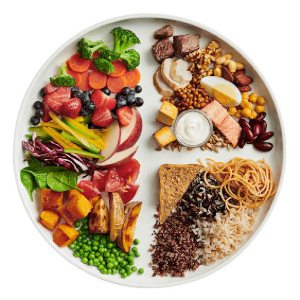 Those are the two key words in the current version of Canada’s Food Guide. The Guide no longer lists com-mon foods with accompanying daily consumption recommendations. Now, the Guide centres its recom-mendations on the standard dinner plate: a regular 10 in / 25 cm dinner plate with one half covered in fresh fruits and veggies, 1/4 with proteins, and the final quarter with whole-grain products.
The message is, “Mix and match. Play with your food! Try new things. But most importantly, eat a variety of foods to ensure you’re getting enough of ALL the nutrients you need.”
My take
Even if your diet is already varied and balanced, it couldn’t hurt to incorporate a few superfoods in your daily and weekly routines.
I’ve added blueberries every morning, switched to whole grain breads and other grain products, started to segue to veggie proteins, and given eggs, beans and leafy greens a higher priority…
~ Maggie J.