
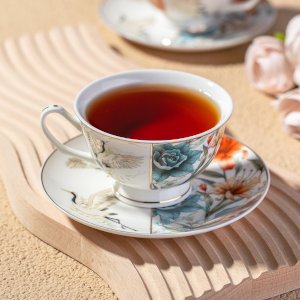
I can’t count all the clinical studies that have come across my screen in the past couple of years ex-tolling the virtues of Coffee – and it’s almost magical flavanols. Now, there’s a new study revealing benefits from moderate daily tea consumption…
 Perhaps the world’s most famous tea drinker… King Charles III, still
looking hale and hearty at 77, despite some recent setbacks…
A new study from China reveals that regular tea drinkers may enjoy up to an 11 percent lower risk of cardiovascular disease than folks who don’t drink tea at all…
A massive survey
The study analyzed daily activity and health evaluation data from nearly 486,000 adults in China who were followed for about nine years. The researchers wanted to know how tea consumption related to heart health.
What they did
“The study, published in the Journal of Internal Medicine, drew on data from the China Kadoorie Biobank and examined a range of conditions affecting the heart and blood vessels,” a Food & Wine story relates.
What they found
Regular tea drinkers were fund to enjoy an 11 percent lower risk of vascular disease, a 37 percent lower risk of ischemic stroke, and a 17 percent lower risk of heart attack compared to those who didn’t drink tea.
“Among people who drank tea at least weekly, researchers estimated that risk was lowest at about six to eight cups a day,” F&W adds. “Cup sizes weren’t standardized, and the study tracked what people already drank. It couldn’t determine how much tea someone should drink to lower their risk.”
Curiously, those who dank more or fewer cups of tea a day suffered a higher risk.
What’s happening?
Tea is a rich source pf polyphenols, powerful antioxidants and anti-inflammatories. And science has already postulated that tea may help, “protect the inner linings of blood vessels from damage that can lead to plaque buildup,” says Dr James Udelson, Chief of Cardiology at Tufts Medical Center. The inner lining is where those amyloid plaques that cause blood flow restriction build up. And that’s the main cause of heart attack and strokes.
Some grey areas…
The study leaves some grey areas for which further research may find harder evidence, allowing re-searchers to quantify the ‘dose’ of tea that yields the greatest benefits. The Chinese data-collection program did not take into account the size of the cups that folks drank from, the strength of the tea they customarily brewed, or the temperature at which it was consumed.
Green tea, too?
The present study focused on regular, black tea. But a previous survey looking at green tea also found benefits associated with vascular health. Green tea has long been held to offer a variety of anti-inflammatory benefits, as well as promoting a sense of well being.
“Green tea has long basked in the wellness spotlight thanks to a reputation for reducing inflammation in the body and, in turn, supporting overall health. It turns out that might not be the drink’s only notable benefit: research published in Frontiers in Public Health found the anti-inflammatory effects of green tea also positively influenced mental health.”
My take
If you enjoy a cup of tea now and then, try enjoying it more often!
~ Maggie J.