

We’ve talked about the addicting qualities of processed foods – particularly those with lots of added sugar – more than once in this space. Now, a new study reveals 87 million adults and kids in the US are clinically addicted to sugar, salt or fat…
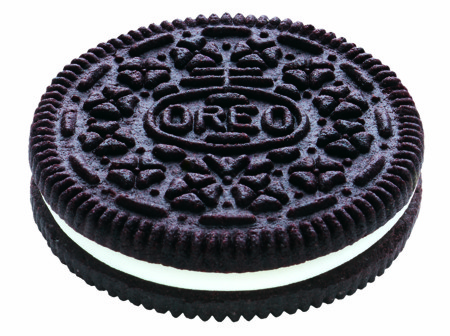 A clinical study way back 2013 proved that OREO cookies are as addictive
as cocaine or morphine. And leverage the same brain mechanisms…
On top of that, the study report notes, an estimated 14 million American adults are addicted to ultra-processed foods – hooked on their excess salt, fat and sugar. Kids and adults together, that’s 87 million people, or 24.85 percent of the population. That’s more than double the 10.5 percent of Americans 12 years old and above who were diagnosed with alcohol addiction back in 2022 (the last year complete numbers are available for).
“Cocaine is much more addictive, between 1,000 percent and 2,000 percent above [the addiction] baseline,” Ashley Gearhardt, a Professor of Psychology at the University of Michigan in Ann Arbor, notes. “But animals [in clinical experiments] still often choose a sweet taste over cocaine.”
A huge problem
It’s a huge problem that needs a higher profile and greater attention from physicians, parents and government. A team under , may have found a way to do that.
Gearhardt developed the Yale Food Addiction Scale (YFAS) to establish firm, objective criteria for diagnosing food addictions.
“Kids are losing control and eating to the point where they feel physically ill,” Gearhardt reports.
“They have intense cravings and may be sneaking, stealing or hiding ultraprocessed foods. […] They may stop going out with friends or doing other activities they used to enjoy in order to stay at home and eat, or they feel too sluggish from overeating to participate in other activities.”
What they found
“By age 2 or 3, children are likely eating more ultraprocessed foods on any given day than a fruit or vegetable, especially if they’re poor and don’t have enough money in their family to [afford] enough quality food to eat,” Gearhardt explains. “Ultraprocessed foods are cheap and literally everywhere, so this is also a social justice issue.”
The mechanism by which kids get hooked is particularly insidious.
“Ultraprocessed food addiction […] teaches the young brain what to expect from food, like how much sugar reward one should get from eating a snack, […] which makes healthier options less appealing,” confirms nutritionist David Wiss, who specializes in treating food addiction. “It’s almost virtually impossible for a child, or even a 14- or 15-year-old, to be able to override all of this biology for very long.”
An extreme case
Chicago native Jeffrey Odwazny says he has been addicted to ultraprocessed food since he was a child. “I was driven to eat and eat and eat. And while I would overeat healthy food, what really got me were the candies, the cakes, the pies, the ice cream,” the 54-year-old former warehouse supervisor recalls.
Odwazney became a classic example of the food-addicted kid Gearhardt describes: “I would go to one store until I bought it all out, and then I would have to travel to another store. […] I would buy two or three family-size bags, and I would eat so much in one sitting that I would be in a fog.”
“Sugary food is a drug for me.”
Strong industry pushback
The The Institute of Food Technologists (IFT) describes itself as, “a forum for passionate science of food professionals and technologists.” That’s another way of saying, it’s the lobby group representing the folks who make the food processing industry hum. And the group has leapt to the defense of the food processors.
“While there is growing concern that some foods may be addictive for certain sub-populations including children, there is currently no scientific consensus to support that concern,” IFT’s Chief Science and Technology Officer, Bryan Hitchcock, told CNN in an email.
The International Food and Beverage Alliance (IFBA), asserts that food addiction remains, “a subject of debate in the scientific community.”
And to be fair, the World Health Organization (WHO) International Classification of Diseases does not officially recognize the condition.
But that’s now poised to change.
My take
There’s no denying that food addiction exists, now that the Yale Food Addiction Scale is in play. Of course, industry forces whose members rely on food processing for their livelihoods and careers are fighting back. But that’s like the tobacco moguls continuing to insisting they ‘don’t believe’ nicotine is addictive, decades after science proved conclusively that it was.
The time has come to treat food addiction with the respect it deserves. The same level of respect and concern that we accord alcohol and drug addiction. And we have to start treating this potentially life-threatening disease with the same tools and methods we’ve developed to help folks kick their tobacco, booze and drug habits.
~ Maggie J.