
We’ve all fallen prey to this disappointing, frustrating shrinkflation deception before. You pick up a box with a partial window showing the contents. But later you find the box was only full enough to fill the window. The issue is much broader than just ‘disappointment’…
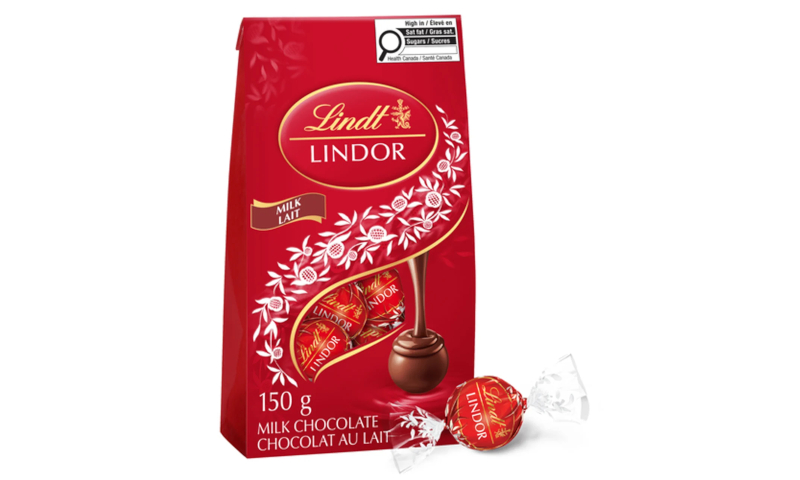 Been here. Bought this. Was disappointed. The bag was only full enough to fill the window.
The dramatic, narrow taper at the top should be enough to give the deception away…
I’ve found this particular deceptive marketing practice most rampant in the food sector. And among the more expensive items, especially. Which is why the Lindt Truffles box cited in the source story for today’s post is all the more appropriate as an example.
What’s the problem?
The manufacturers will tell you they clearly printed the weight and contents’ description on the front of the box. That’s true. That’s the law. But that’s not the problem. They only gave you half a box of product, which is deceptive. The issue is officially known as excess packaging. And it’s been the source of many a consumer complaint over the past decade or so.
More than one kind…
There’s more than one kind of excess packaging. The Lindt box represents one. The other is when you pick up, say, a heart-shaped box of Valentines candies with no window to show you the interior… And find only after opening it that the bonbons inside sit amid wide expanses of empty space. Artistic? Maybe. But it’s still a cheat. Even if the maker was technically straight with you on the label.
I discovered a post by a marketing firm that illustrates no fewer than 7 different examples of deceptive packaging with self-explanatory photos of each.
But… It’s legal
Why brands employ deceptive packaging is a no-brainer. It’s clearly to make the buyer think they’re getting more for their money than they are. The Cool Down contributor Laurelle Stelle points out, “This [also] leads to overspending, and higher costs as buyers need to purchase more packages to make up the difference and meet their needs.”
Stelle includes a Redditor’s plaintif video to demonstrate her point.
But that’s not all. Stelle also considers the big picture: “Meanwhile, the ratio of packaging to product is unnecessarily high when items are sold this way. This drives up costs, and those increases are pas-sed on to consumers. Not only that, the wasted packaging represents wasted resources and energy, placing unnecessary strain on the environment and our production system. We have fewer resources and more pollution because of practices like these.”
The problem lies in the law. It’s legal in most Western jurisdictions to practice excessive packaging as long as you’re transparent and truthful about what in the package on the label. But most shoppers gauge the contents by the size of the package. A few are now testing the weight, as well, to see if it matches their expectation based on the size of the package.
Alas… manufacturers are smart enough to know most shoppers aren’t wise enough, or motivated enough to take a little extra time when choosing products. Especially ones with luxe brand names and fancy package art.
What can you do?
Stelle has some suggestions…
“As much as possible, choose brands [you know] are honest and transparent about their packaging practices. Look for completely full boxes and packets,” she recommends. Here’s where you check the weight. “Ideally, you should also look for biodegradable materials. Paper, cardboard, and biodegrad-able plastic substitutes are always the superior choice.”
My take
The Lindt website actually offers a message which specifically addresses ‘Packaging and Material efficiency’:
“Our vision is to support a circular economy and address environmental risks by employing pack-aging solutions that can help us achieve our ambitions,” the statement begins. “We proactively chal-lenge our entire packaging portfolio, and endeavor to reduce the amount of packaging materials used. Our focus areas are the use of recycled materials, and design for recyclability. The sourcing of pulp- and paper-based materials that are PEFC or FSC certified will help us to improve our negative supply chain impacts”
Clearly… The folks who make the policies and write the website bumpf are not talking with the folks who actually design and implement the packaging… That MUST be it. Surely, Lind isn’t lying to us about their packaging practices?
~ Maggie J.