
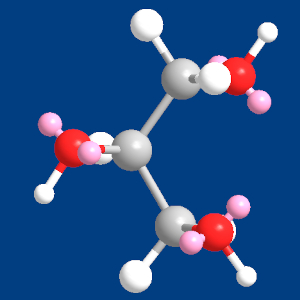
Why is it that so many recent research reports have revealed new ‘magic bullet’ discoveries? This week, it’s a new ‘ON-OFF Switch’ for fat burning which also helps strengthen your bones. And it all centres on a common metabolic compound: glycerol…

The secret is a molecule that controls a hidden energy-burning system inside brown fat. Brown fat is the stuff that your body burns to provide heat and – when you’re exerting yourself – extra energy.
Mystery solved…
Unlike white fat, which stores energy, brown fat burns calories to generate heat. Scientists had long believed this heat production depended on a single biological pathway. In recent years, however, investigators identified a second pathway operating alongside the original one, but they did not know what activated it.
A team led by Dr Lawrence Kazak at McGill University’s Rosalind and Morris Goodman Cancer Institute has now identified the molecular trigger for this alternative system.
How it works
When the body is exposed to cold temperatures, it breaks down stored fat to create heat. That pro-cess releases glycerol, a molecule produced during fat metabolism. The researchers discovered that glycerol binds to an enzyme called TNAP in a region they describe as the glycerol pocket. This inter-action activates the alternative heat-producing pathway.
“This is the first time we’ve identified how an alternative heat-producing pathway is activated, inde-pendent of the classic system,” said Kazak, Associate Professor in the Department of Biochemistry and the Canada Research Chair in Adipocyte Biology.
“That opens the door to understanding how multiple energy-burning systems work together to keep the body warm at the just-right temperature,” Kazak adds.
But it also reveals a way to turn on the body’s fat-burning systems at will – and thereby help reduce fat buildup.
Some bones about it…
The glycerol breakthrough may also eventually help counteract one well-known form of bone deter-ioration. The TNAP enzyme is essential for calcification, the process that builds and maintains strong bones. Mutations that reduce TNAP activity can cause hypophosphatasia, a rare disorder sometimes called ‘soft bones’.
The condition can lead to fractures, chronic pain, and skeletal abnormalities. Certain inherited mut-ations have made the disorder more common in parts of Canada, including Quebec and Manitoba.
The takeaway
The researchers say real-world applications of their discovery will probably arrive sooner in the bone health arena than they will in the obesity sphere. But their current research is at a very early stage, and it may take years for approved dugs or treatments to emerge in either sector.
My take
It’s enough for me, as an older woman, to know that something is on the horizon in both of the areas the researchers have identified. As faithful followers of the FFB wil know, my life has been a constant struggle with unwanted extra weight. And I’m now also in the age bracket where I have to keep an eye on my bone health – to guard against osteoporosis…
Bring it on, McGill!
~ Maggie J.