
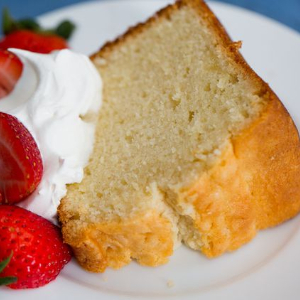
I can’t believe I ‘lost’ this old-school baking technique between leaving home at 18 and… yesterday. But it is now back in my ‘culinary repertoire’. And I want everybody to know it. Because I’m probably not the only one who ‘lost it’…
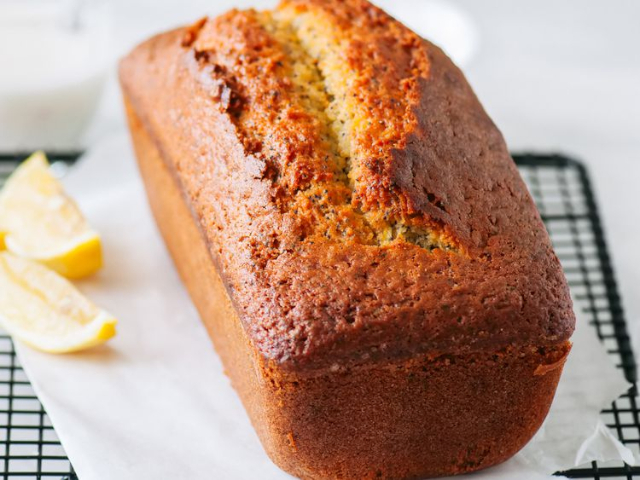 Taller, lighter, more ‘composed’: A Classic Quick Bread made
the usual way, but treated to Mom’s greased-knife hack…
The past came crashing in on me when I read the post at AllRecipes.com. It was about a tiny but crit-ical baking hack I learned from my mother. But lost somewhere between the day I moved into res at university, and yesterday…
How could I?
Mom passed away last year. And she never remarked on my having ‘lost’ the crucial hack she passed down to me when I was still just a ‘junior’ cook. But she had to have noticed. I whipped up quick breads all the time when she was visiting. And she always had something nice to say about them. Of course, that was Mom. She was a very proper lady and often (too often for my liking) reminded me, “If you can’t say something nice, don’t say anything at all!”
More’s the wonder to me… How did I ever lose her essential tidbit of quick bread wisdom? The ans-wer is simple enough: After not making any for a few years (in college), I started up again throwing my quick loaves together without really thinking about them. One notable time I did make an effort was in ‘baking lab’, at culinary school many years later, when I wanted to impress my chef-instructor. I remember distinctly how generously he complimented by generously-cracked loaf…
“Chefs don’t even know this!”
All of which leaves me in total agreement with food writer Nick deSimone when she asserts many pastry chefs working today don’t even know this ‘secret’.
And that’s a crying shame. Because they – and millions of diners who consume their creations – are missing out on taller, lighter, altogether ‘more-composed’ treats.
A similar experience…
DeSimone tells a tale similar to mine – except that she learned the tip from her grandmother – a quick bread artist nonpareil – and never ‘lost it’.
“I grew up in the kitchen with her, watching her churn out perfect baked goods in a way that only years of experience can produce. Regardless of what a recipe says, my grandma has some unique way of doing it; loaf cakes are no exception.
“Her final step before the oven was always to melt a small pat of butter, dip a butter knife in it, and then run the buttered blade down the middle of the cake. I never really questioned it; it was just what you did with loaf cakes. It was as second nature as greasing a pan or brushing dough with egg wash.”
There you have it!
It’s as simple as that.
Social media types talk about ‘cringe-worthy moments’. I experienced my most cringe-worthy instant ever when I realized that I drifted so far from my mother’s knee.
At first hearing, you might argue that the greased knife trick’ is just an old baker’s tale. Something people who just naturally make superior quick breads do out of habit, but which doesn’t really make a material difference in the outcome of their recipes. I
Ah, ye of little faith!
There’s proof…
DeSimone – who’s researched the issue right down to the sheer physics and chemistry of it – shares with us how the hack works:
“What was behind my grandma’s magic? [Quick breads] are dense batters. In the oven, the outside begins to cook much faster than the inside; the [ever-present] crack is from the inner batter rising and releasing steam through the semi-cooked outer batter. A [loaf] without a crack usually indicates a deflated, overly dense, and decidedly un-fluffy [loaf].
“However, as any baker will tell you, batters and doughs can have a mind of their own. Sometimes, these cracks happen unevenly and can affect the evenness of the cooking on the whole loaf. Painting that stripe of butter creates almost an outline that tells the batter where to crack while the fat from the butter pushes the edges of the crack [back] from the middle.
“Not only does it look nice and consistent across multiple cakes, but it encourages the batter to cook more evenly and brown more evenly across the surface of the cake.”
My take
So much for the popular – albeit, obviously erroneous – axiom that a well-cracked loaf top indicates a superior quick bread!
My concern with this whole experience is… How many other invaluable old-school culinary tips and hacks I learned from Mom, all those years ago, have I lost?
~ Maggie J.