There’s a new ‘wellness supplement’ beverage out there. And official watchdogs are warning it may be the latest addictive craze. It promises, “relaxation, productivity and focus.” But even its own label warns the product can be ‘habit-forming’…
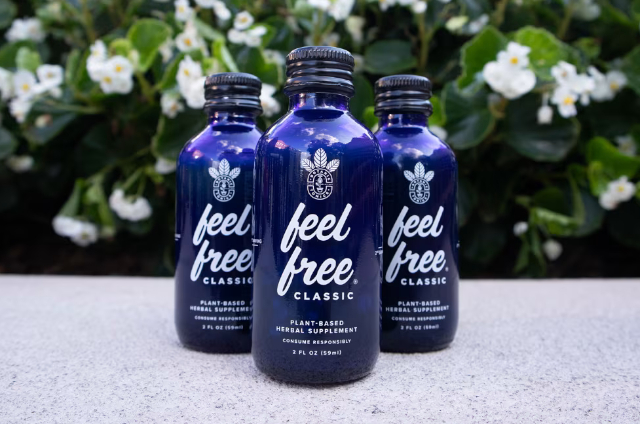
‘Feel Free’ is what they call the stuff. And even its maker cautions it’s powerful stuff, not to be treated casually. It’s sold in a very small, 2 oz. bottle – almost like a drug – and a ‘regular dose’ is half that. For those who are challenged by the imperial / metric divide… That translates to a 4 tbsp. / 60 ml bottle, and a 2 tbsp. / 30 ml daily maximum ‘dose’. Just like cough syrups or other over-the-counter (OTC) medications.
Some may be abusing…
I’ll bet there are some folks who are – albeit unknowingly – abusing Feel Free. The kind of folks who look at the little bottle and think, “There can’t be that much active ingredient in there. And it IS an OTC…” So they just go ahead and treat it as if it was another bottle of Boost, Ensure or the equivalent – mostly harmless. And, of course, chug the whole bottle.
It contains two main active ingredients: Kava and kratom…
Kava is a beverage or extract typically made from the root of the pepper plant Piper methysticum which is native to the South Pacific islands. The drink is known for inducing mild euphoria and depressant effects. Depending on consumption levels, susceptible folks can develop physical tolerance and, thus, experience withdrawal, says Dr. Oliver Grundmann, researcher and clinical professor in the Department of Medicinal Chemistry at the University of Florida.
But kava is generally not considered addictive.
Enter, Kratom…
It’s kratom, the other naturtally-sourced ingredient in Feel Free, that is being zeroed in on as the culprit. And Grundmann is also considered an authority on Kratom.
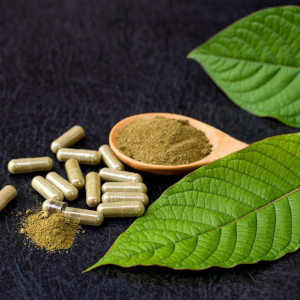
Kratom, which is classified as ‘herbal’. It’s made from the leaves of a tropical tree scientifically known as Mitragyna speciosa, which is native to Southeast Asia. According to the US Food and Drug Admin-istration, Kratom has both stimulant and sedative effects. It’s easily the more powerful of the two leading actors Feel Free, making the more potentially dangerous.
Sold as a supplement in various forms — including powders, loose-leaf teas, capsules, tablets and concentrates — kratom carries a known risk for addiction due to how it interacts with the brain, Grundmann says.
My take
Feel Free – though I’ve never heard of it before today – is apparently a popular ‘wellness’ supple-ment. It retails for (US)$8 to $13 per bottle, at more than 24,000 gas stations, smoke shops, and convenience stores, including grocery and health food stores, US-wide.
Feel Free has apparently been around for a while. It was targeted in a 2023 class action lawsuit in which it settled with the plaintifs, but did not admit to any wrongdoing. The maker, Botanic Tonics, maintains it’s product is safe – if used as directed…
But there is lots more to know about Feel Free and its back story. Be aware, before you commit to reading the 17-minute, in-depth feature at CNN…
~ Maggie J.