

It’s the day after the day after… And some of us who have been ploughing whole-hog (or turkey) through the Holiday Food Fest will be waking up to something they should have expected, but somehow overlooked: The telltale taste (and aroma) of over indulgence…
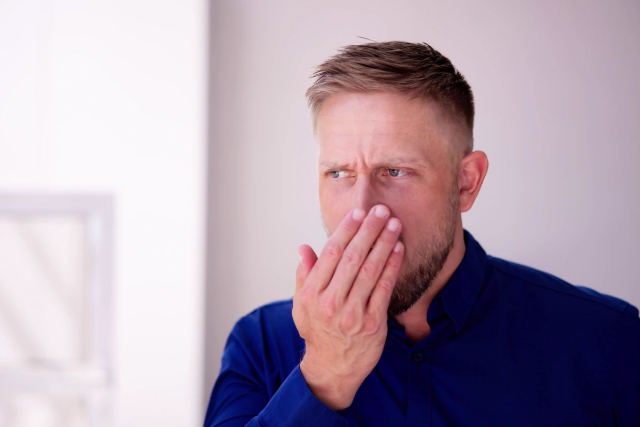
“Halitosis, or bad breath, can be seriously humiliating. [But] you don’t have to live with it forever!” South Point Dental assures us. “Simply by brushing and flossing at least two times a day, particularly after you’ve eaten, can help. The tongue collects a lot of bacteria and gunk so be sure to brush it – you can even use a tongue scraper. If you rinse your mouth with water or mouthwash after, that will do you wonders.”
The key question…
Which mouthwash is best? Most effective?
Until recently, most dentists and physicians recommended a ‘modern’ formula containing chlor-hexidine, the long-accepted ‘gold standard’ in antimicrobial mouthwashes.
Chlorhexidine displaced alcohol in mouth washes as an antibacterial agent some time ago. And nothing better has been found since. Until now.
A ‘more-natural’ alternative
Researchers at the University of Sharjah (in the United Arab Emirates) say they’ve found an agent that challenges – maybe even out-performs – clorhexidine, and is cheap, plentiful and found everywhere.
Their study surveyed the cream of the crop of scientific bad breath articles from around the globe…
What they found
“Chlorhexidine is widely used as a gold standard mouthwash but is associated with side effects and concerns over antimicrobial resistance,” the authors explain. “Garlic (Allium sativum), known for natural antimicrobial properties, has emerged as a potential alternative.”
“The effectiveness varied based on mouthwash concentration and duration of application, contrib-uting to differences in outcomes,” the review noted. “Some studies favored chlorhexidine for main-taining higher plaque/salivary pH, while others reported garlic extract to be more effective at certain concentrations. However, garlic mouth-wash may cause greater discomfort.”
The takeaway
The review offers strong support for the clinical antimicrobial activity of garlic extract, reporting, “significant reductions in bacterial counts from baseline [values] […] suggesting the possible use of garlic extract mouthwash as a viable alternative to chlorhexidine in certain contexts.”
Follow-on research is indicated…
My take
I know you’re all wondering… “Won’t swishing with garlic just make my bad breath worse?” The re-searchers say, “No!” They’re talking about garlic EXTRACT, which is free of the flavour and odour biological compounds found in whole garlic.
And they also note that: “The effectiveness varied based on mouthwash concentration and duration of application, contributing to differences in outcomes,” the review noted. “[…] However, garlic mouthwash may cause greater discomfort [than chlorhexidine].”
That would be one issue the follow-on research would have to explore.
I have no basis or which to evaluate the concept of garlic mouthwash. Because it doesn’t exist yet, as a commercially available preparation. But when it does, I’ll be first in line. Listerine Original has a worse after-burn than cheap Tequila…
~ Maggie J.