
There’s a reason some foods never show up in the frozen goods cases at the supermarket. They just don’t freeze well. But some foods you will find there are healthier than others. How can you tell which frozen foods are your best bets?
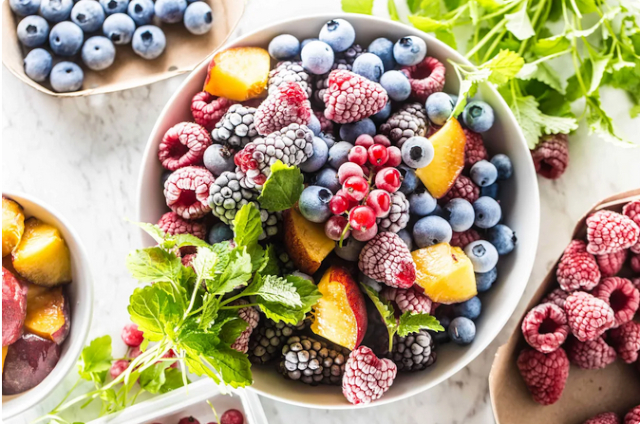
I’ve often remarked, in this space, that frozen foods – certain types – are great alternatives to their fresh siblings. And they may even have advantages over fresh produce…
What makes them healthy?
It’s simple. Flash freezing fruits and veggies as soon as possible after they’re harvested preserves them at the peak of their colour, flavour and texture and nutritional value.
And they’ll stay safe in ‘suspended animation’ for a long time.
What makes them economical?
First and foremost, there’s no waste! When you invest in frozen foods, you’re getting pure value for your scarce dollars. You don’t have to fuss with peeling, shucking or otherwise removing parts of the plants that aren’t going to be eaten. And that cuts the volume of waste you have to haul out to the street on garbage day. Which, in turn, reduces the amount of organic waste your municipality has to deal with at the landfill. Which could just possibly reduce the tax dollars you have to pay to support the whole waste management system.
What makes them so useful?
Because frozen fruits and veggies will stay ‘fresh’ in your freezer for long periods of time, you can have them at your fingertips whenever you need them for a recipe or as a side.
You’ll find you ‘throw together’ more impromptu stews and hearty soups when you have frozen veg-gies on hand that you can just toss into the pot. And I’ve found that my tacos, burritos, Ramen bowls and other Asian dishes also benefit from on-the-fly enrichment.
But there are a few drawbacks…
“Say it ain’t so!” you cry. But, yes, it’s true. The good news is, you can minimize the negatives sur-rounding frozen foods with a little forethought and a smidge of extra effort.
All frozen foods are prey to the insidious infiltration of freezer burn. That’s simply the withdrawal of moisture from foods – even when frozen totally hard – when they come in contact with air. That’s the primary reason many commercial frozen foods, particularly meats, come vacuum-packed in heavy plastic.
More good news: More and more supermarket frozen foods are being shipped in reclosable ‘zip’ bags, which allows you to minimize air contact with the food once the package is opened. And you can pro-tect your investment in frozen floods that come in non-reclosable bags by just rolling down the open end and securing it with something as simple as a ‘bulldog’-style paper clip.
What are the ‘best’ frozen foods?
Registered Dietician Christina Manian, in a recent article for REAL SIMPLE, reveals her picks for the best, healthiest frozen foods you can get from the supermarket.
I’ve curated the list, paring it down to a vital few ‘essential’ categories we should all consider stock-ing in our own freezers…
Lean Protein
“High-quality frozen protein, like fish filets, is a great value and can be convenient to keep on hand for a quick weeknight dinner,” says Kayla Farrell, a registered dietitian and senior account executive at FRESH Communications. But ‘lean protein’ can also mean skinless, well-trimmed meats, poultry and seafood.
Vegetable Medleys
Frozen veggie ‘choruses’ can dramatically reduce effort required in the kitchen. “I like getting a mix of vegetables that also helps save time on prep, like [a] mix of sweet potatoes, cauliflower, and broccoli florets,” says Farrell. But make sure the medley you grab is made up of complementary veggies. I pre-fer to keep separate bags of essential frozen veggies (sweet corn kernels, green peas, carrots, broccoli florets, and Brussels sprouts. I also keep a small bag of Edamame beans on hand – to kick my Asian soups (which I make a lot) up to a whole new level…
Fruit Blends
“Similar to frozen veggies, frozen fruits are often not only nearly as tasty and nutrient-dense as their fresh relatives,” Manian notes. “But many varieties are actually preferred for certain recipes [such as] smoothies and desserts.” That’s because melons, mangoes, papayas and similar fruits tend to turn mushy when they’ve thawed. But buzzed up in a smoothie or fruit sauce, nobody will notice. They’re just as flavourful, colourful and nutritious as when they were fresh. It’s just a texture thing – merely a perception issue.
Whole Grain Products
Craft, or ‘artisan’ breads and other baked goods may be presented frozen at the supermarket. That’s because they contain few id any additives which would make them last longer without spoilage on a room temperature shelf.
My take
While we’ve only suggested four categories of frozen foods in this post, remember that there’s a wide variety of products in each category. Go exploring!
~ Maggie J.