

A new warning today, for young adults who are significantly overweight or obese… The so-called Western Diet has been found to be severely deficient in choline – a substance tied to both body and brain health.
 Teens may be getting less choline than they need. And the results can include liver strain and elevated systemic in-flammation. In the long run, a dietary choline deficiency may accelerate brain deterioration leading to cognitive impairment.
Experimental evidence
A team of researchers at Arizona State University worked with with partners at several institutions, trying to discover patterns associated with early brain decline.
A central aspect of the study involved choline. It’s a relatively common nu-trient essential for cell-membrane structure, inflammation control, liver function and the production of ace-tylcholine, a neurotransmitter import-ant for memory. Participants with obes-ity had substantially lower levels of circulating choline. And these reduct-ions corresponded with stronger signs of inflammation, insulin resistance, liver-enzyme elevation and other indicators.
What they found
Participants with obesity had substantially lower levels of circulating choline. And these reductions corresponded with stronger signs of inflammation, insulin resistance, liver-enzyme elevation and other indicators.
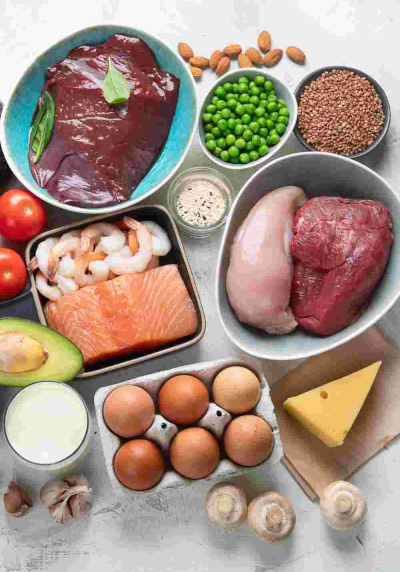
Although the liver produces some choline, most must come from food. Rich dietary sources include eggs, poultry, fish, beans and cruciferous vegetables such as broccoli, cauliflower and brussels sprouts. The researchers also observed that women in the study had lower choline levels than men, a notable finding because women experience higher rates of cognitive aging and Alzheimer’s disease.
The takeaway
“Our results suggest that, in young adults, good metabolic health and adequate choline contribute to neuronal health, laying the groundwork for healthy aging,” said Dr. Jessica Judd, co-author of the study.
My take
With the possible exclusion of eggs, kids these days rarely see fish, beans or cruciferous veggies on their plates. And that makes the choline deficiency situation all the more critical.
The researchers don’t touch on the issue of supplements. But you can get choline from dozens of suppliers, some versions with other complementary nutrients. These products are not especially expensive as supplements go: about $15 for 100 tablets. If you have a teen who’s on the heavy side, it might be well worth your time – and hers – to look into choline.
The only drawback I see is, none of the choline supplements I saw came as gummies or in fruit flavours. Which might pose a challenge getting some kids to take them…
~ Maggie J.