

Canada is into its second Fall of food price mayhem, aggravated by Trump tariffs, and informed by a growing ‘Buy Canadian’ movement. And Canadian producers and grocers are adapting in a number of ways to what’s gone from a fad to a genuine trend…
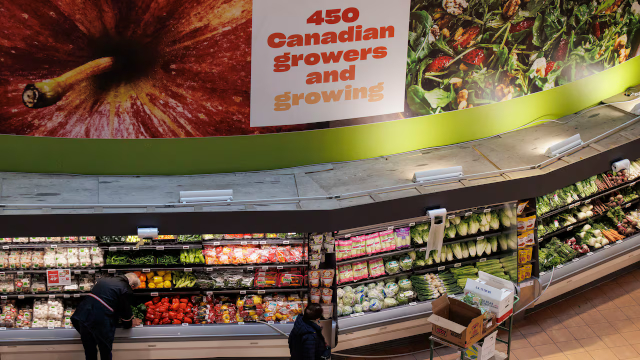
We’re in for the long term. Grocery retailers, economists and food scene observers agree that Cana-dians are making permanent changes to their methods and preferences to ensure that future dis-ruptions in fresh food supplies from abroad don’t materially affect us.
Where we’re at
Canada is the world’s 5th largest importer of fresh produce, by dollar value. And until recently, the US was the largest supplier, followed closely by Mexico.
Canada’s produce imports from the US fell to 62.6 percent in July of this year, government figures showed, compared to 69 percent in the same month of 2023, before US President Donald Trump was elected.
Most recently, the pressure to shun US produce increased when the latest round of Canada-US trade talks broke down August 21. The failure of those negotiations resulted in new Trump tariffs and new Canadian counter-tariffs.
High oil prices affect everything
Since then, Trump’s war on Iran has caused oil prices to soar even higher then in months past, with gasoline and diesel prices reaching unprecedented heights.
Here in Canada, that’s meant even higher prices for anything trucked to market. And the affect has been especially severe on food imports from below the border.
‘Buy Canadian’
The worsening food price situation has been reflected in a new grassroots push behind the govern-ment-supported Buy Canadian movement, and a complementary response from the food retail sector.
“There has been a permanent change in the Canadian psyche,” says Gary Sands, Senior Vice President of Public Policy and Advocacy for the Canadian Federation of Independent Grocers.
Where we’re headed…
One regional grocery chain has taken exceptional steps to answer the consumer demand for more Canadian produce. Giancarlo Trimarchi, President of independent grocer Vince’s Markets operating in the Greater Toronto Region, used his company’s Facebook account to ‘advertise’ that his stores now stock 90 percent Canadian-grown fruits and veggies. He felt compelled to demonstrate Vince’s good will and community spirit after a barrage of angry e-mails over the summer complaining that the stores were stocking too much US produce.
“[The Buy Canadian push] is a lot more aggressive this time around than last year,” Trimarchi told Reuters. “We were always put in a position where you had to balance quality versus price. Now it’s quality versus price versus country of origin.”
Canada’s largest food retailer, Loblaw’s, recently reinstated previously discontinued proprietary signs and symbols designed to make it easy for shoppers to tell what’s a Canadian product and what’s not. Large red maple leaf signs have appeared in Loblaw’s produce departments indicating which products were grown in Canada. And the chain has started adding ‘T’ symbols to its packaged goods again, to indicate which products are affected by US tariffs.
Government support
The Federal Government is making substantive moves to support Canadian produce growers. One outstanding example is the recent commitment to invest $1.3 billion over 10 years to build green-houses to increase production during what’s traditionally been the ‘off season’. Greenhouse pro-duction is already a proven, economically viable, sustainable route in Canada. And it’s the only logical way to increase the availability of domestic produce through the three coldest seasons of our year.
Non-US imports
Meanwhile, all food retailers are exploring new sources for imported produce not connected to the US. One promising vector is expanding trade with countries such as Spain, Brazil and Honduras, which are already trading partners.
Earlier this week, Prime Minister Mark Carney announced he’s seeking closer ties to the European Union, which should – among other important factors – help make imports from that collective source more attractive to Canadians.
My take
Any measure, within reason, that makes fresh produce more available and more affordable for Canadians is good news.
The persistence of the Buy Canadian movement – regardless of price – is undoubtedly the strongest driver behind the new and growing push by all players in the food supply chain to make Canada’s food system more sustainable…
~ Maggie J.