
It might be the breakthrough that saves the world from the plastic waste scourge. Researchers have developed a new plastic-like material that degrades in just a few weeks, rather than sticking around forever – or 250 years, whichever comes first…
A global crisis
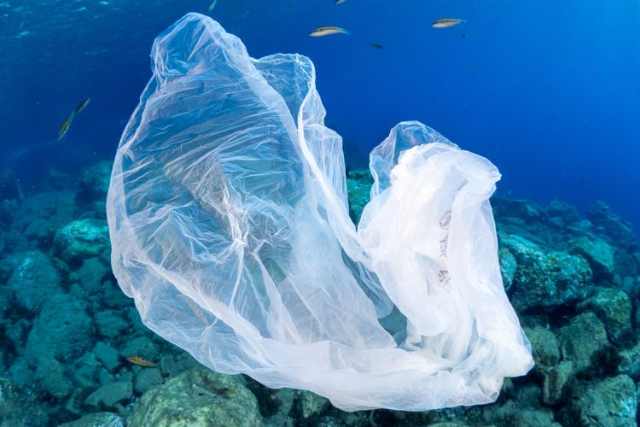
The growing tide of discarded plastic items – from packaging to drinking straws – is threatening our world’s environment as never before. It’s not just mountains of plastic water bottles, take-out bev lids and 6-pack harnesses. It’s the microplastics that break off them as they jostle in the oceans, and get into everything we eat and drink.
So, a recent breakthrough by researchers from Flinders University in South Australia could literally save the world. Or at least, humanity.
What it is
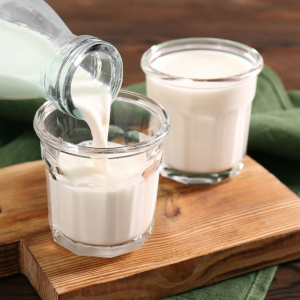
The material developed by the Flinders team is, specifically, a packaging film that could replace cur-rent petroleum-based products. It’s strong, flexible and stretchable, just like regular food film. But it’s made of milk protein.
The key ingredient, casein, is found naturally in milk. And the plastic wrap made from it breaks down completely in about 13 weeks in contact with soil. That’s a clinical way of saying, it’s efficiently bio-degradable. Which is another way of saying, it’s sustainable. Even the researchers predict the new material could have significant impacts, both in commercial applications and at home.
Even better, its cheaper
To seal the deal, the new ‘milk plastic’ could well be cheaper than petro-plastic, once its perfected and scaled up for commercial production.
“The entire formulation was designed to use inexpensive ingredients that are biodegradable and en-vironmentally friendly to create a sustainable alternative with enhanced characteristics,” said team member professor Nikolay Estiven Gomez Mesa from the Department of Engineering at Universidad de Bogotá.
My take
“Most of our single use plastic comes from food packaging, so these sorts of options should be ex-plored further and join the circular economy revolution to conserve resources,” Gomez observes.
That’s an exceptionally optimistic prediction. But it may not be too far off future reality. We’ll just have to wait and see if the potential of ‘milk plastic’ is fulfilled.
However… We still need to find a way to rid our oceans and landfills of already-discarded petro-plastics. And, perhaps most importantly, clean up nanoplastic pollution that directly threatens us all.
~ Maggie J.