
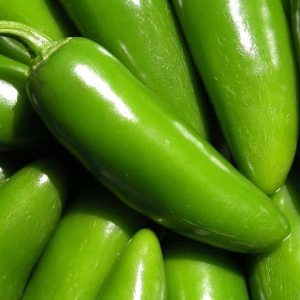
Did you notice? Jalapeño peppers seem to have been getting milder lately. It’s no illusion. Nor is it mass hysteria. Plant breeders have been toiling away, making the ‘heat’ level of Jalapeños more ‘consistent’ for foods like salsa…
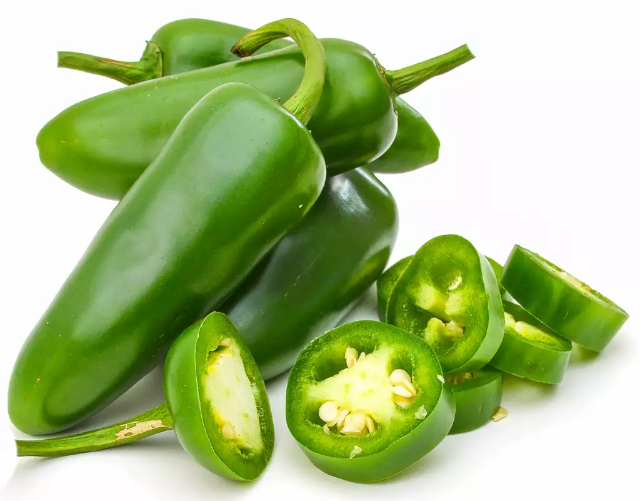
Straighter, more consistent in size, colour, flavour and heat level, Jalapeños…
For the record, we’re not talking GMO tinkering. Just the usual selective breeding and controlled cross-pollination that plant breeders have been using since Gregor Mendel first described how the tech-nique works hundreds of years ago.
The plot heats up…
“In the early nineteen eighties, demand for Mexican food was growing all over America,” Willa Paskin of Decoder Ring explains. “Sales at Mexican restaurants had doubled in just a few years, but consu-mer tastes varied widely.”
One of the most noticeable results of the increase of interest in Mexican food was a sharp spike in demand for Jalapeños, one of the most commonly used peppers in the cuisine.
In concert with the Mexican food boom, plant breeder, Dr. Benigno Villalon developed the TAM Jalapeño to meet the exploding demand from food processors and restaurateurs for a low-heat, visually appealing, and bug-resistant version of the industry staple. So closely associated with the breeding program was Villalon that he quickly acquired the nicknane, ‘Dr. Pepper’.
No easy ‘fix’…
Dr. Stephanie Walker, of New Mexico State University, says achieving heat consistency, specifically, has not been as easy as researchers initially hoped it would be. “For chili peppers, predicting pun-gency is hard. So the pungency level of a different chili pepper variety is based on genetics, but also the environment.”
Experiments have included full-scale manufacturing tests. “When we did vats of salsa, we wanted to have it mild, medium, or hot,” Walker recalls. “And if you happened to get a load of jalapeños that were extra hot, we might ‘mislabel’ a whole day’s run of medium or mild salsa.”
Flash forward 20 years…
But the breeding effort continued. And by the early 2000s, a couple of specific, consistently-milder varieties of Jalapeño had been developed.
Because as much as 60 percent of the annual Jalapeño crop goes straight to processing plants, growers focused on those new, milder types. And the result was a shift in the character of the of Jalapeños reaching our supermarket shelves – which absorbed a growing overload of ‘consistent’ peppers.
My take
Some chili pepper enthusiasts – dare I say ‘purists’? – have lately been complaining that mainstream Jalapeños have become lame and flat.
Walker suggests, “If you want a good, hot jalapeño, buy some of the heirloom varieties. You know, plant your own.” If you can’t find or grow heirloom jalapeños, simply upgrade to slightly hotter var-ieties such as serranos, habaneros, or Scotch bonnets – many of which are ‘consistently’ available at supermarkets now-a-days…
~ Maggie J.