
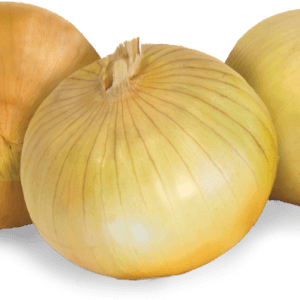
Yesterday, we looked at Vanilla vs. Almond flavourings. Today, we journey to the other end of the flavour spectrum… If you, like many cooks out there, thought there was no material difference between White and Yellow Onions, Maggie’s here to help!
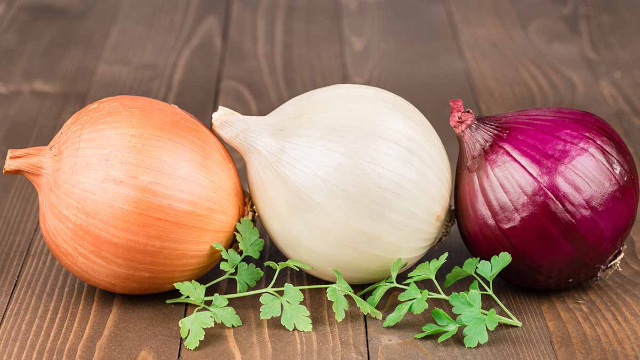
Yellow, White and Red Onions: The three most-common types….
The onion spectrum
There’s a continuum in the Onion universe, on which Yellow and White Onions are in the middle. Red Onions, Shallots, Leeks and Scallions are off to the right a bit. And ‘sweet’ types such as Vidalia and Bermuda are on the far-right end. Spanish onions and other strong types are on the far-left end. Garlic sits mid-left on the line.
Today, we’re focusing on the every-day ‘bulb’-type onions we all turn to for cooking, salads and so on. Specifically, White and Yellow onions. Because I’ve just learned that there are some cooks out there who think that the two are interchangeable, drop-in replacements for each other.
White Onions are for raw prep
The difference in the two main onion types is, one is milder and sweeter, while the other is stronger and more ‘tang-forward’.
White onions are the milder variety, and they are used to greatest advantage as salad additions, burger and taco toppings, and in other raw applications. Fresh Salsa Cruda, Pico de Gallo and Guacamole come to mind…
Yellow Onions are for ‘cooked’ prep
Use them in soups, stews sauces and other recipes which are prepared over heat. Yellows have stronger, more nuanced flavour, with a natural bitterness which tends to moderate under the influence of cooking.
Yellow Onions are your best bet to add the pronounced, though not-so-earthy umami component you seek in lighter-flavoured dishes. That’s why they’re a natural fit for Italian sauces and other dishes where tomatoes predominate.
“If a recipe says onion without specifying what type, it’s assumed to be a yellow onion,” The Spruce Eats recommends. “Use them for making French Onion soup or a batch of classic caramelized onions.”
My take
With the vital information imparted above under your apron-strings, you’re well on your way to producing better-balanced, more enjoyable dishes where onions are featured.
DO take these simple new ‘guidelines’ to heart. They really do make a difference!
~ Maggie J.