
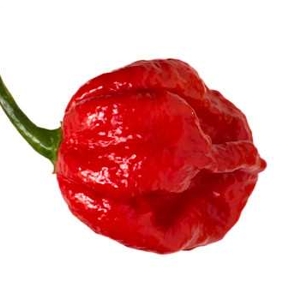
When does ‘Extra Spicy’ become a health hazard? I’ve been asking for years. But nobody has come out with any kind of official answer. Nevertheless, evidence has been piling up. And now, Denmark has taken up the challenge…
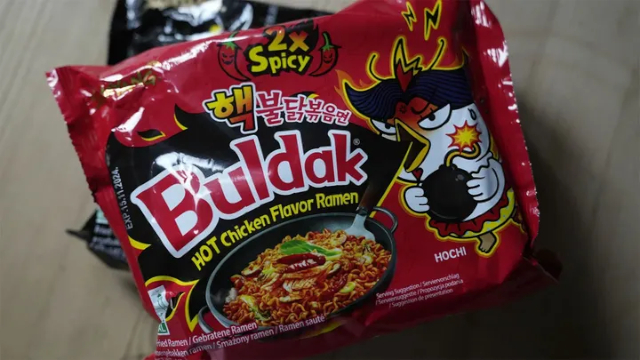 One of the recalled products deemed a danger to public health
by the Danish Veterinary and Food Administration…
Clear and present danger
The evidence has been staring us in the face for years. Remember those crazy hot pepper eating contests that surfaced back in the early and mid 20-teens? People risked life, limb and esophagus trying to down the most, hottest peppers. Many ended up in the hospital.
More recently, the One Chip Challenge exhorted daredevils to buy the ‘kit’: a single corn chip infused with Carolina Reaper Hot Peppers (see photo, top of page). They’re only about 2 million times hotter than your average Jalapeño. And three people had died trying the challenge, at last count.
Pepper growers not helping
Far from helping, the hot pepper breeders have been pushing the worsening situation. Rarely does a year go by that one or two new, hotter peppers are not revealed to the world.
It’s a boys-will-be-boys contest (yes, all the prominent breeders are men) between quirky horti-culturalists across the western world, trying to wrest the Guinness Book of Records title from the other guy’s grasp. Sometimes only a few months, or weeks, pass before the World’s Hottest Pepper ‘honour’ changes hands again.
Time for action
I’ve said over and over again it’s past time for some sort of action to not only define how hot is too hot, but to regulate the pepper content of consumer products, to protect unsuspecting purchasers from ill-informed decisions.
And Denmark has become the first country to step up.
A recent report on FOX News relates: “The Danish Veterinary and Food Administration announced the recall of three types of South Korean spicy instant noodle products because the capsaicin, or chili pepper extract level is so high it could pose a health hazard.”
“The Associated Press reported that the authorities say the products contain an overly high dose of capsaicin, which is an active ingredient in chili peppers. But capsaicin is also a chemical that can be considered a neurotoxin, and poses a risk of ‘acute poisoning’.
Another social media mess
The Danish agency also noted that South Korean products have recently soared in popularity on social media. Children and teenagers in Denmark have been daring each other, online, to eat, “a strong bowl of noodle soup.”
We know that South Koreans love their heat. Their national dish is Kimchi, a fermented cabbage condiment that’s considered wimpy if it’s not flaming hot. But unspecting kids in other cultures can easily be caught short – and sick – if they don’t appreciate that.
My take
As I said… It’s about time.
I’ve previously advocated, on more than one occasion, that hot pepper challenges should be banned. Alas, the social media channels through which these nutty notions promulgate are not filtered or regulated in any way. Impressionable kids, and teens (who probably should know better), get sucked in all too easily. And some end up with serious injuries. Or six feet under.
But Denmark has proven… If you can’t regulate the internet, you can regulate what foods are available in your supermarkets.
Canadian and US readers should note that the Buldak products recalled in Denmark – 2x and 3x hot chili pepper noodles – are still on sale in North America, in supermarkets and on Amazon. We’ll keep you posted…
~ Maggie J.