
It’s a given, among eating researchers, that most mammals – including humans – have a ‘satiety signalling system’ that’s supposed to tell us when to stop eating. But the way it works has remained mysterious – until now. And it’s really Just simple math…
 Researchers think they’ve discovered why some folks
literally ‘don’t know’ when it’s time to stop eating…
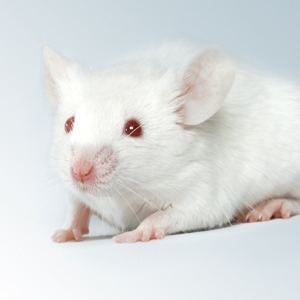
It’s all ‘mouse-magic’ at this point, but researchers at Columbia University Irving Medical Center say they’ve figured out how the brain monitors – and signals the body – when it’s time to stop eating…
Couldn’t be simpler
There’s nothing magic about it, really. And it seems fool-proof. Researchers have known for some time that the ‘circuits’ in the brain that keep track of eating behaviour are centred in the brain stem – the oldest and most fundamental part of our neurological complex. But until now, they haven’t known exactly how the brain knows when to tell us them to sop eating.
What they did
The decision to stop eating is a familiar, conscious phenomenon. “It happens every time we sit down to eat a meal,” research team leader Alexander Nectow says. “At a certain point while we’re eating, we start to feel full, and then we get fuller, and then we get to a point where we think, okay, that’s enough,”
It turns out that a very small cluster of brain cells controls the decision to stop eating. So small, in fact, that it took recent advances in brain scanning technology to make them ‘visible’. Researchers found a way to turn these specific neurons on an off using light pulses. And after some simple ex-periments, they deduced that there brain cells specifically, count each bite of food we take.
What they found
… And then, when the count reaches a certain threshold, they tell us to stop eating. In normal, natural use, the ‘circuit’ is turned of by a hormone that increases appetite, and activated by a GLP-1 agonist, similar to Ozempic and other agents which help control appetite and support weight loss.
“Essentially, these neurons can smell food, see food, feel food in the mouth and in the gut, and inter-pret all the gut hormones that are released in response to eating,” Nectow says. “And ultimately, they leverage all of this information to decide when enough is enough.”
The takeaway
GLP-1 receptor meds are now well-known to help regulate appetite. And that ties in perfectly with the new information the Columbia study has provided about how the system works.
The specialized neurons have so far been found only in mice. But Nectow says their location in the brainstem, a part of the brain that is essentially the same in all vertebrates, suggests that it is highly likely that humans have the same neurons.
“We think it’s a major new entry point to understanding what it means to be full, how that comes about, and how that is leveraged to end a meal,” Nectow adds. “And we hope that it could be used for obesity therapies down the road.”
My take
One angle Nectow and his colleagues don’t get into in their study report is, how damage or defects to this tiny but crucial part of the brain may explain why some ‘compulsive eaters’ can’t stop eating, no matter what they do…
More to the point…
As I’ve observed more than once already, in the past few weeks, there’s been a literal flood of new findings in brain studies focused on appetite and its role in obesity. Ever day, I become more con-vinced that the middle of the 2020s will go down in history is the ‘moment’ that we finally turned the corner and started down the home stretch toward finding a final and definitive way to beat obesity…
~ Maggie J.