
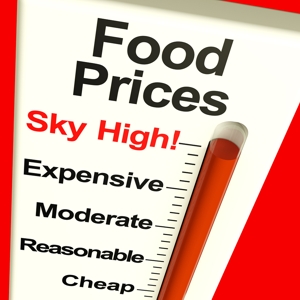
Uncertainty continues about how US businesses will cope with Trump’s Tariffs as time goes by. In the short term, official economic figures show consumers have been paying a little more here, a little more there…
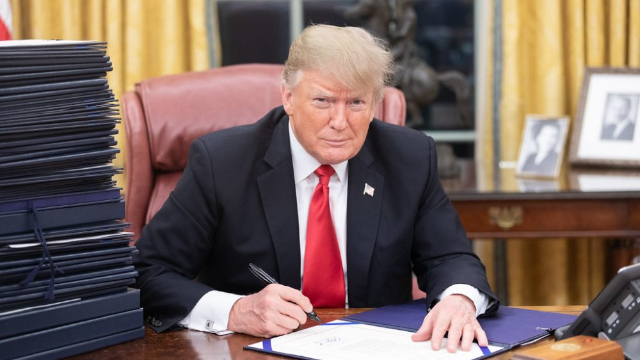 Trump signs a mountain of tariff orders in a high-profile Oval Office event…
But how long that stop-gap plan can last remains to be seen… It’s an intricate dance involving con-sumers, importers, foreign exporters which is about to come to a crescendo – before ending in a discordant crash.
Consumers shielded
“Through June of this year, US consumers had absorbed 22 percent of tariff costs,” according to a CNN analysis. That’s much less than the total. But various economic factors have made such cushioning possible – until now. The experts are calling it ‘sneakflation’.
However, but the share shouldered by consumers was expected to rise to 67 percent by October, according to an August 10 estimate from Goldman Sachs. That assessment makes Trump’s version of how tariffs are ‘working’ look very skewed. And it makes him look very bad.
So what does Trump do when this happens? He’s resorting to distraction and blame-shifting, cul-minating in a demand that the investment giant fire its chief economist.
Goldman Sachs economists, meanwhile, still insist they expect that about 70 percent of the direct costs of the tariffs will eventually fall on the consumer.
What’s going on?
There’s a simple way to explain why shielding the consumer is no longer working. The players who have been juggling the bulk of the costs of Trump’s tariffs have reached a point where they aren’t sure how much longer they can continue to do that. They built a dam, but the reservoir behind it is almost full. And a new word is creeping into the tariffs discussion: ‘overflow’.
“Businesses say they’re working both with suppliers and consumers to help share some of the cost burden,” Bush said. “They do indicate that they’re willing to eat some of the cost for now,” Matt Bush, a US economist at Guggenheim Investments, observes. “But I think, as the realization sets in that these tariffs are not going back down, they will start to pass more on to consumers.”
My take
I’ve been saying all along that US consumers will have to foot the bill for Trump’s tariffs – later, if not sooner. Well… They’ve had their ‘sooner’, and ‘later’ looms…
~ Maggie J.