
2.3 min. read
As the Holidays approach, we hear seasonal music classics over and over again as backgound noise at retail stores – especially supermarkets. Ever wonder about those ‘Chestnuts roasting on an open fire’? The real deal may be coming back…
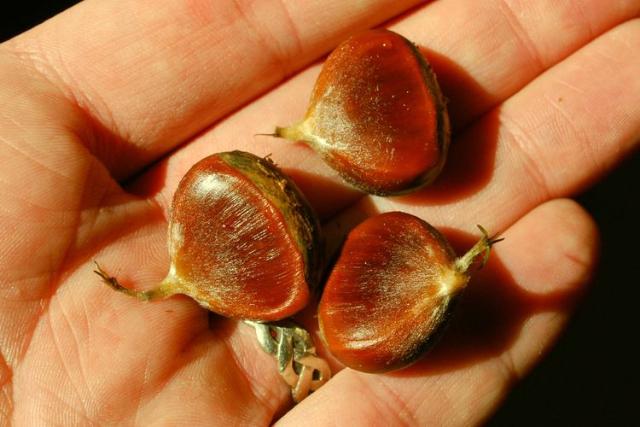
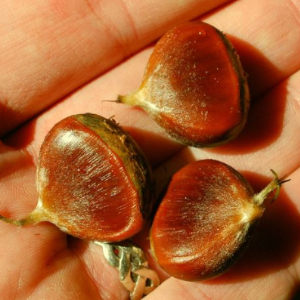
We’re talking about the American Chestnut, which was the centrepiece of a beloved year-end tradition dating back to Colonial times. Chestnuts were plentiful then, and folks gathered them in October and November to use in a variety of dishes. Chestnut Stuffing is still a ‘thing’ among afi-cionados. But ‘eating’ chestnuts are now a comparative luxuy, coming mainly as canned imports.
A plague on them…
The American Chestnut was once one of the most common trees in North America. They made up roughly 25 percent of all hardwoods in the Eastern Forests. Until a fungal blight killed an estimated 3 to 4 billion of them in the first half of the 20th century.
The good news…
… Is that science is reviving the classic American Chestnut after about a hundred years of near ext-inction.And that could (should!) mean a renaissance for the certified superfood.
They’re high in fibre and protein, and deliver a load of complex carbohydrates which won’t spike your blood sugar like the cane sugar or fructose commonly found in UPFs. According to Nutsforlife.com, “Nutritionally, they are closer to whole grains. And taste-wise, chestnuts have a sweet nutty taste, but a texture more like a baked potato.”
What they’re doing
Researchers at SUNY College of Environmental Science and Forestry (ESF) have recently received permission from the US Department of Agriculture’s Animal and Plant Health Inspection Service (APHIS) to freely propagate a new blight-free Variety of the American Chestnut. It’s the fruit (pun intended) of a special genetic enginering project.
“This means the trees do not spread in ways that would harm forests, farms, or the environment,” Andrew Newhouse, director of ESF’s American Chestnut Research and Restoration Project, said in a statement. “As a result, the trees are no longer regulated by USDA APHIS.”
The Darling 54 American Chestnut, is seen as they key to restoring Eastern Forests to their former glory, with Chestnuts growing plentifully alongside other nativce species such as Maples, Oaks, and Hickories.
Also a commercial renaissance?
A new era of the American Chestnut could also herald its reemergence as a favourite food, on the order of Walnuts’ popularity. And that could trigger a major agricultural boom, cultivating the nut.
“These days, the chestnuts in your roasting pan have likely traveled internationally to reach the US,” a recent Food & Wine story reveals. “Americans eat more than 7.5 million pounds of chestnuts each year, [but] most come from Italy, China, and Korea, according to Nebraska Public Media in 2021.”
“However, the ESF has long seen the potential financial windfall in re-growing the American chestnut, noting that trees can begin flowering in as little as five years,” F&W adds. And the ESF announcement noted: “Not every new crop has its own Christmas carol already ingrained into the culture.”
My take
It would be great of the American Chestnut became a common sight in North America again. And if their nuts once again showed up fresh, by the bushel baskeful in the produce sexction… Yes, you can famously roast them by the fire. But they also make a wonderful purée, and are classically added to a host of Italian dishes in chopped form. Not to mention all the baked goodies you could explore – if you had access to enough cheap Chestnuts!
~ Maggie J.