
Overexposure to common antibiotics has made them less effective. Especially against so-called Superbugs… One issue is careless use of antibiotics by MDs and patients when treating human diseases. Another is the heavy use of antibiotics in livestock…
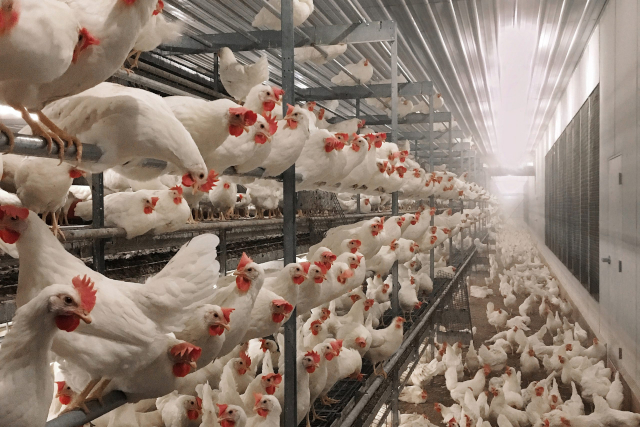 Crowded living conditions that make commercial chicken and egg
production viable also make the use of antibiotics inevitable.
In fact, one of the main reasons we’ve recently seen the emergence of whole new classes of ‘super-bugs’ is that some of the most serious bacterial afflictions which plague humankind have become drug-resistant.
What are they?
“The term ‘drug-resistant superbug’ is somewhat non-specific,” admits says Angelo Falcone, MD, an integrative medicine practitioner. Broadly, however, however, it refers to a bacterial strain that has developed the ability to ‘endure antibiotics which originally eliminated them’.
“Think of them as bacteria that have developed armor against our medical weapons,” Falcone ex-plains. “They’ve learned to neutralize antibiotics, pump them out of their cells, or modify their structures so the antibiotics can’t recognize them anymore.”
The dark side is, infections caused by superbugs no longer respond to standard treatments, leaving doctors with fewer, or no effective treatment options.
How can that be?
Suberbugs are, essentially, our own fault. Both doctors and patients have, over the past few decades, developed careless behaviours that promote the development of drug-resistant infections.
“When we use antibiotics, we kill susceptible bacteria, but bacteria with random mutations that pro-vide even slight protection can survive,” Falcone explains. “These survivors then multiply, passing their resistance genes to offspring, and what accelerates this natural process is our overuse and misuse of antibiotics, such as using antibiotics when they’re not needed, not finishing prescribed courses, or using broad-spectrum antibiotics when targeted ones would suffice.”
There’s also the issue of massive, indiscriminate veterinary overuse of antibiotics. Which results in huge amounts of the drugs ‘escaping’ into the environment every year, and many meat products coming to market with residual antibiotics ‘on board’.
How oyster proteins help…
Oyster-derived compounds that support antibiotics in their work by ‘likely work by inhibiting es-sential bacterial enzymes or disrupting bacterial cell membranes, essentially poking holes in bac-terial defenses’, Falcone says.
It’s believed that oyster ‘helper’ proteins enhance conventional antibiotics through synergistic action. That’s just a fancy way of saying the combination of two or more drugs produces a greater effect than that of each, or either drug alone.
When combined with antibiotics, oyster proteins may help the drugs penetrate bacterial defenses more effectively, allowing the antibiotics easier access to the bacteria to do their work.
Hit and miss
Oyster proteins have not proven universally effective. But they have demonstrated they can enhance the power of some antibiotics by as as much as 32 percent against certain superbugs that have pro-ven ‘notoriously resistant’, to multiple drugs.
Now that the mechanism by which the oyster proteins work has been discovered, researchers are moving full steam ahead on developing additional ‘antibiotic-helper’ compounds and finding ways to turn them into clinically useful drugs. Alas, it may take years, or even decades before the drugs become available for human use.
My take
So serious has the superbug problem become that laws have been passed in many developed coun-tries limiting antibioticuse in agriculture. Folks who advocate against the over- or indiscriminate use of drugs such as antibiotics and growth hormones have been calling for controls, or outright bans on them for years.
But farmers have fought such efforts, saying it would cost so much more to raise poultry, cattle, and pigs without the drugs that consumers couldn’t afford to eat them anymore. Putting the farmers out of business.
I have to agree with the farmers. But they’re headed for a great shift away from raising animal pro-teins and toward plant-based foods, anyway. Climate change is already making raising animals for food an unsustainable proposition a number of fronts.
I suspect it will come down, once again, to a battle pitting human nature against reality before the inevitable shift comes to pass…
~ Maggie J.